

What Is the Best Jewelry for Sensitive Skin?
Last Updated: October 26, 2026
Quick Summary
The best jewelry for sensitive skin is made from metals that release little to no nickel, such as titanium, niobium, platinum, and high-karat gold, followed by nickel-free sterling silver and surgical-grade stainless steel. Nickel is the most common cause of allergic contact dermatitis worldwide, and reactions can appear 12 to 48 hours after contact. Match the metal to the body area and verify alloy claims before buying.
- Nickel is the most common cause of allergic contact dermatitis worldwide.
- Reactions can appear 12 to 48 hours after contact with nickel.
- Plated base metal is fine for occasional wear but poor for daily contact.
- Use implant-grade titanium, niobium, or nickel-free silver for ear piercings.
- Treat nickel-free as a claim to verify, not a fact to trust.
Table of Contents
- Why Some Jewelry Irritates Sensitive Skin
- Jewelry Metals for Sensitive Skin Compared
- Titanium Jewelry for Sensitive Skin: What to Know
- Nickel-Free Jewelry: What the Label Really Means
- Best Earrings for Sensitive Ears
- How to Verify Material Claims Before You Buy
- Shop Sensitive-Skin-Friendly Pieces at AmberShop21
- Frequently Asked Questions
Why Some Jewelry Irritates Sensitive Skin
The best jewelry for sensitive skin is made from metals that release little to no nickel, and the irritation most people blame on "cheap jewelry" is usually a nickel allergy in disguise.
Nickel is the most common cause of allergic contact dermatitis worldwide, and it shows up in everything from costume earrings to watch bands to the buttons on your jeans. The reaction is not instant. Your immune system has to learn to recognize the metal first, which is why a necklace you wore for years can suddenly start bothering you in your thirties.
That delayed onset confuses people. They assume the jewelry "went bad." It didn't. Their immune system changed its mind.
Nickel Allergy and Contact Dermatitis
Contact dermatitis is an inflammatory skin reaction caused by direct contact with an irritant or allergen (Advancing the understanding of allergic contact dermatitis). When nickel triggers it, the result is a red, itchy, sometimes blistering rash exactly where the metal touched your skin.
Ear piercings are the most common site because the post sits inside living tissue. A watch clasp or ring follows close behind. The American Academy of Dermatology's guidance on nickel allergy notes that reactions can appear 12 to 48 hours after contact, which is why people blame a new lotion or a hot day instead of the earrings they put on yesterday.
Watch out: if a rash spreads well beyond the contact area or comes with swelling and trouble breathing, that is a medical situation, not a jewelry problem. See a doctor.
Plating, Base Metal, and Wear Over Time
Plated jewelry is the sneaky one. A gold-colored earring might be brass or a copper alloy with a microscopic layer of gold on top. That layer is measured in microns, and friction, sweat, and cleaning wear it down. Once the plating thins, the base metal touches your skin directly.
This is why a pair of earrings can be fine for months and then suddenly cause a reaction. Nothing about the earrings changed except the coating.
Jewelry Metals for Sensitive Skin Compared
Ranked by how reliably they suit reactive skin, the safest metals are titanium, niobium, platinum, and high-karat gold, followed by nickel-free sterling silver and surgical-grade stainless steel. Everything else depends on the alloy and the plating. But "safest" is not the same as "best for you", the right choice depends on where you wear the piece, how often, and what you can spend.
Here's how the common options stack up:
925 Sterling Silver Fashion Ring for Women →
| Metal | Nickel Risk | Durability | Upfront Cost | Maintenance | Best For |
|---|---|---|---|---|---|
| Titanium | Very low | Excellent | Moderate | Wipe clean; resists tarnish | Piercings, everyday wear, active use |
| Niobium | Very low | Good | Moderate | Anodized color can scratch | Piercings, color without plating |
| Platinum | Very low | Excellent | Highest | Occasional professional polish | Fine jewelry, heirlooms, rings |
| 14K-24K gold | Low at high karats | Good to excellent | High | Gentle cleaning; alloys matter | Rings, necklaces, daily fine jewelry |
| Sterling silver (925) | Low if nickel-free | Good | Accessible | Tarnish care; re-polish | Everyday pieces, budget fine jewelry |
| Surgical-grade steel | Low to moderate | Good | Low | Easy care; alloy varies | Budget everyday wear, watch bands |
| Plated base metal | High over time | Poor | Lowest | Re-plating eventually needed | Occasional wear only |
A note on gold: karat measures purity, not safety. 24-karat gold is nearly pure and the least reactive. 14-karat gold is an alloy, so the other metals in the mix matter. Yellow gold alloys are typically kinder to sensitive skin than white gold, which is often rhodium plated and can wear through to a nickel-bearing layer underneath. If you want the look of white metal without that risk, platinum or palladium-white gold are the more durable routes.
Sterling silver is a solid middle ground, and 925 silver with a nickel-free alloy is one of the most practical choices for daily wear. If you want a concrete starting point, our 925 sterling silver fashion ring is a straightforward example of a sterling piece.

Budget and Value: What You Actually Pay For
- Lowest upfront, highest turnover: plated base metal. Fine for a costume look you wear occasionally, poor for daily contact.
- Best cost-per-wear for reactive skin: titanium and nickel-free sterling silver. Moderate upfront cost, long service life, minimal maintenance.
- Highest upfront, longest life: platinum and high-karat gold. Expensive to buy, but durable and often repairable or resizable, which matters for rings and heirlooms.
- Middle ground: surgical-grade steel. Affordable and widely available, but alloy quality varies, so verify the grade rather than trusting the word "surgical."
Match the Metal to the Body Area
- Ear piercings: the post sits inside living tissue, so use implant-grade titanium, niobium, or nickel-free silver. Avoid plated posts entirely.
- Rings: constant friction and hand-washing trap moisture and soap. Solid gold, platinum, or titanium hold up best; plated rings wear through fastest at the inner band.
- Necklaces: pendants rest against the chest, where sweat and perfume concentrate. Nickel-free silver and high-karat gold are practical; check the clasp, which is often a cheaper alloy than the chain.
- Body jewelry: prolonged contact and movement make implant-grade titanium the default. Verify the grade, not just the word "titanium."
Titanium Jewelry for Sensitive Skin: What to Know
One caveat nobody mentions: titanium is not automatically nickel-free in every product. Some titanium alloys contain small amounts of nickel, and "titanium" on a label can describe a coating rather than the core metal. Ask for the grade.
Nickel-Free Jewelry: What the Label Really Means
The practical takeaway: treat "nickel-free" as a claim to verify, not a fact to trust. A seller who can tell you the alloy and the plating is worth more than one who stamps "hypoallergenic" on the card.
Best Earrings for Sensitive Ears
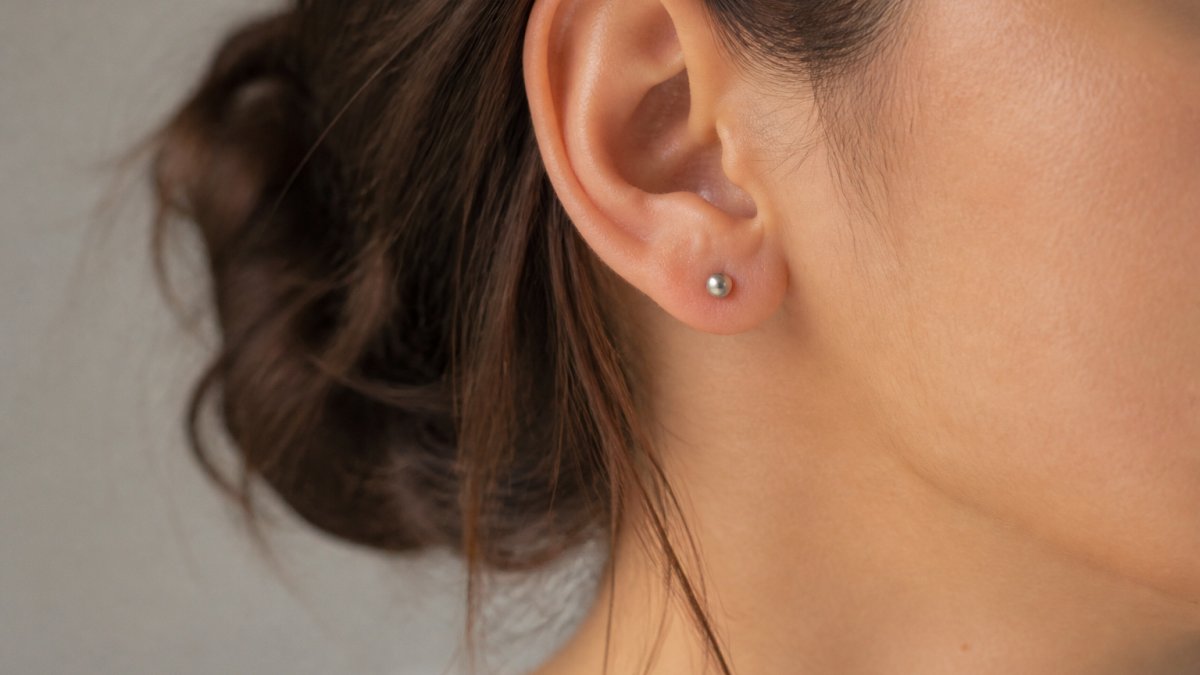
Look for titanium, niobium, or nickel-free sterling silver posts. You can browse a rhinestone sunflower fashion earring as a concrete option. Avoid "gold plated" posts unless the seller specifies the base metal, because plated brass and plated steel are common and both can contain nickel. Implant-grade titanium (often labeled Ti-6Al-4V ELI) is the most reliable choice for new or sensitive piercings.
Backs, Fit, and Friction
- Fit matters: a post that is too tight presses the earring into the skin, causing friction irritation even when the metal is safe. A post that is too loose lets the earring move and tug.
Sweat, Products, and Daily Wear
- Remove earrings before heavy exercise or swimming if the piercing is sensitive.
- Clean posts and backs with mild soap and water, then dry fully.
- Let the piercing site dry before reinserting earrings.
- Rotate between a few trusted pairs rather than wearing one pair constantly.
How to Verify Material Claims Before You Buy
- Does the listing name the base metal (titanium, sterling silver, brass, steel)?
- If plated, does it state the plating thickness in microns?
- Is "nickel-free" stated as a material claim, not a marketing badge?
- Are there close-up photos of the post, clasp, or inner band?
- Does the return policy cover a reaction or a material that doesn't match the listing?
For anyone with a known nickel allergy, the FDA's guidance on jewelry and metal reactions is worth a read before you buy from an unfamiliar seller. It explains what labels do and don't guarantee.
Shop Sensitive-Skin-Friendly Pieces at AmberShop21
At AmberShop21, we offer a carefully curated collection of jewelry, including a 925 sterling silver ring designed for everyday wear. Our collection brings together accessible jewelry and stylish pieces to support everyday self-expression.
Frequently Asked Questions
What metal is good for sensitive skin piercings?
Titanium and 14-karat or higher yellow gold are the most reliable choices for new or sensitive piercings. Titanium is lightweight, nickel-free in its pure form, and resists tarnish, which makes it a common pick for earring posts. Surgical-grade steel can work for some people, but it contains nickel, so those with a confirmed nickel allergy should avoid it. Sterling silver is fine for healed piercings but not ideal for fresh ones because it can tarnish and darken the skin.
Is sterling silver good for sensitive skin?
925 sterling silver is 92.5% pure silver mixed with other metals, usually copper, and it works well for many people with sensitive skin. The catch is that some sterling silver pieces contain trace nickel in the alloy or in the plating. Look for nickel-free sterling silver and rhodium plating, which adds a barrier between the metal and your skin. Avoid sterling silver in fresh piercings, and clean pieces regularly since tarnish can irritate sensitive ears.
Is gold-plated jewelry safe for sensitive skin?
Gold-plated jewelry can be safe at first, but the thin gold layer wears away with friction, sweat, and cleaning, eventually exposing the base metal underneath. Once that happens, nickel or copper can touch your skin and trigger a rash. If you love the gold look, choose solid 14-karat gold or a thicker gold fill for everyday wear. For occasional wear, plated pieces are fine as long as you check the base metal and stop wearing them at the first sign of itching or redness.
How can I tell if jewelry contains nickel?
There is no reliable at-home test, so check the label and ask the seller directly. Look for terms like nickel-free, hypoallergenic, titanium, 925 sterling silver, or 14-karat gold. Be cautious with vague descriptions like fashion jewelry or alloy, which often hide nickel. A dermatologist can confirm a nickel allergy with a patch test, and that result tells you exactly which metals to avoid. When in doubt, choose titanium or verified nickel-free pieces for daily wear.
Your skin deserves jewelry that works as hard as you do. Browse our curated jewelry collection at AmberShop21 and find pieces made for daily wear, easy styling, and the confidence that comes from knowing what's against your skin.


