

Setting Spray vs Powder for Long Wear
Table of Contents
- Setting Spray vs Powder: What Each Does
- Which Keeps Makeup Lasting Longer
- How to Apply Setting Powder and Setting Spray
- Setting Spray Before or After Powder: Application Order
- Best Setting Powder for Oily Skin
- How to Stop Makeup from Getting Oily Throughout the Day
- Using Both Together for Maximum Hold
- Frequently Asked Questions
Last Updated: October 13, 2026
Setting Spray vs Powder: What Each Does
When it comes to making makeup last all day, the choice between setting spray vs powder for long wear matters more than most people realize. Both products serve the same goal, locking makeup in place, but they work in completely different ways. Understanding how each one functions is the first step to choosing what works best for your skin and lifestyle.
How Setting Powder Works
Setting powder creates a matte barrier between your skin and makeup. The powder particles absorb excess oil and moisture, preventing your foundation and concealer from sliding around. When you apply powder, it sits on top of your makeup and creates a dry, stable surface. This is especially helpful if you have oily skin or struggle with shine throughout the day.
Powder works best immediately after applying foundation and concealer. The fine particles lock those products in place and prevent them from moving. Many makeup artists use powder as their first line of defense against creasing and fading.
How Setting Spray Works
Setting spray is a liquid mist that dries down to create an invisible, flexible shield over your entire face. Unlike powder, spray doesn't add texture or coverage, it simply locks everything in place with a weightless finish. The spray creates a breathable barrier that holds makeup without the matte effect of powder.
Many people find setting spray more comfortable for all-day wear because it doesn't feel heavy on the skin. The mist distributes evenly across your face, setting foundation, powder, and even eyeshadow in one application. The AmberShop21 Makeup Mist Spray lasting Matte Makeup Effect Waterproof is designed to resist sweat and humidity while keeping your skin fresh throughout the day.

Which Keeps Makeup Lasting Longer
The answer depends on your skin type and the conditions you're facing. Setting powder excels at oil control and is unbeatable if your main concern is shine and creasing throughout the day. The powder absorbs excess sebum as it appears, keeping your makeup looking fresh longer between touch-ups.
Setting spray, on the other hand, creates a more durable overall hold. It locks your entire makeup application in place, foundation, powder, and eyeshadow, all at once.
The best approach for maximum longevity is often using both together. Powder handles oil control throughout the day, while spray creates the protective barrier that keeps everything locked in place. This combination addresses two different challenges: absorption and adhesion.
How to Apply Setting Powder and Setting Spray
The order and technique matter when you're applying setting powder and setting spray. Start with a fluffy brush and apply powder to areas where you tend to get oily first, usually the T-zone, under the eyes, and along the jawline.
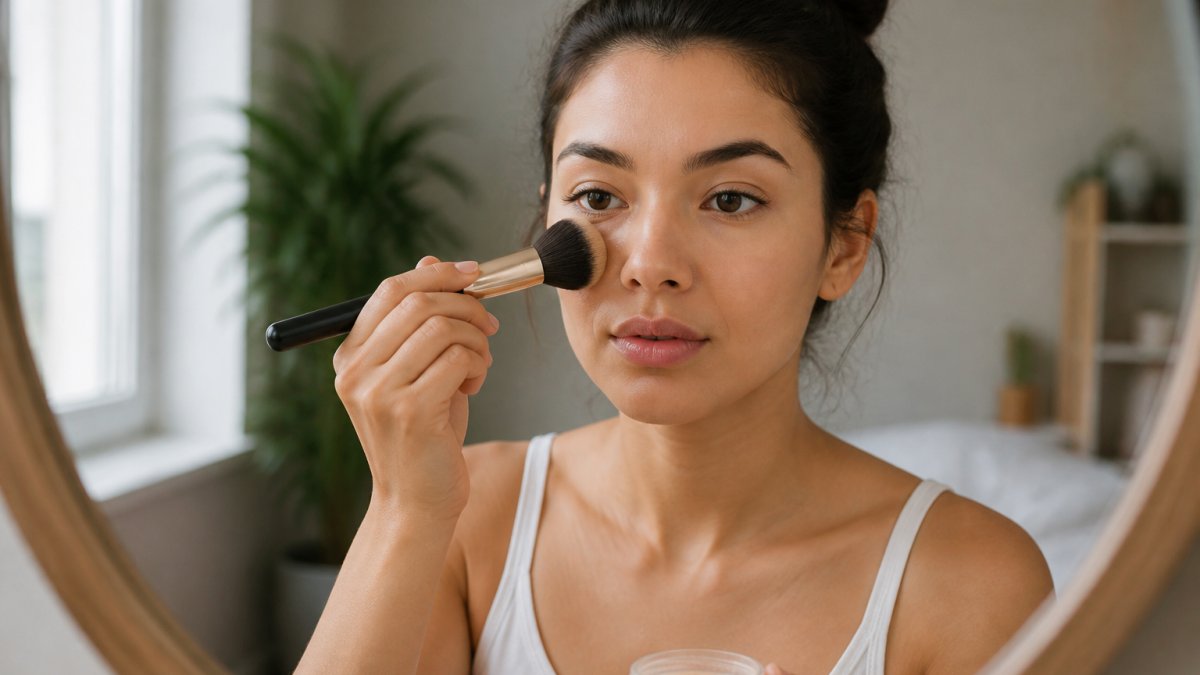
For setting spray, hold the bottle 6-8 inches away from your face and mist in an X and T pattern.
Setting Spray Before or After Powder: Application Order
Most guides give you one rule and move on. The reality is that order changes how your makeup behaves under specific conditions, and the right sequence depends on what you are trying to protect against.
The default sequence and why it works
Powder first, then spray. Here is the mechanism: powder particles sit on top of your foundation and concealer and absorb oil as it rises to the surface. Spray applied afterward forms a flexible film that binds the powder, the foundation, and the concealer into a single layer.
A common pattern among working makeup artists is to wait 30 to 60 seconds after powdering before misting. This lets the powder warm against the skin and meld with the foundation instead of sitting as a separate layer that the spray can lift.
When to reverse the order
If your skin is dry or you want a dewy finish, spray first, then powder only where you need it. The spray acts as a hydrating base layer that keeps powder from pulling moisture out of your cheeks and forehead. Powder goes on last, but only in the T-zone, under the eyes, and along the jawline, never across the full face.
If you are dealing with high humidity or a long event, the reverse order also helps: a light spray layer before powder gives the powder something to adhere to, which reduces the chance of it flaking or transferring when you sweat.
Order by condition
- Hot, humid day: Spray, then powder the oily zones, then a second light spray to seal. The double spray creates a more sweat-resistant film.
- Dry, heated indoor day: Spray, then minimal powder only where needed. Skip the second spray to avoid a tight, dry feeling.
- Long workday with a matte finish goal: Powder first across the T-zone, then spray the full face. Touch up with blotting papers, not more powder, at the midday mark.
- Photo or event with flash: Powder first, spray second, and let the spray dry fully, at least two minutes, before you are photographed. A wet film reflects light and can flash back white in photos.
Timing between steps
The gap between powder and spray matters more than most people realize. If you spray immediately after powdering, the mist can disturb the powder before it has settled. Wait about a minute. If you are layering spray under powder, let the first spray dry completely, usually 60 to 90 seconds, before applying powder, or the powder will clump.
Best Setting Powder for Oily Skin
Oily skin does not need more powder. It needs the right powder in the right places, applied in a way that controls shine without creating a cakey surface that cracks by noon.
Makeup Mist Spray lasting Matte Makeup Effect Waterproof →
What to look for in the formula
Finely-milled translucent powders are the safest starting point because they do not add color or coverage and they blur rather than mask. Beyond that, look at what the powder is built on:
- Silica-based powders absorb oil aggressively and feel weightless, but they can look chalky on deeper skin tones if over-applied. Use a light hand.
- Clay-based powders (kaolin, bentonite) pull oil without the chalky cast and tend to wear longer through humidity. They can feel drying on the cheeks, so keep them to the T-zone.
- Rice starch powders absorb oil more gently and are a good option if silica feels too drying. They are less common but worth seeking out.
- Pressed powders are easier to control than loose powders and less likely to kick up dust or over-apply. Loose powders give a finer finish but require more technique.
How your foundation formula changes the choice
This is the part most guides skip. The powder you choose should complement your foundation, not fight it.
- Silicone-based foundation (most long-wear formulas): Pair with a silica or clay powder. Silicone foundations are already oil-resistant, so you need less powder than you think. Over-powdering a silicone foundation is the fastest route to a cakey, separating finish.
- Water-based foundation: Pair with a rice starch or finely-milled translucent powder. Water-based formulas break down faster under oil, so powder is doing more work here. Apply it in thin layers and build.
- Cream or stick foundation: Set with a pressed powder rather than loose. Cream formulas need a denser powder to lock in place, and loose powder can slide off the cream surface.
- Tinted moisturizer or skin tint: Use the lightest powder you own, or skip powder entirely on the cheeks and powder only the T-zone. These formulas are not built to carry heavy powder.
Application that actually lasts
Use a small, dense brush rather than a large fluffy one. A dense brush presses powder into the skin instead of dusting it across the surface, which is what you want for oil control. Press, do not sweep.
Apply to the T-zone, under the eyes, and along the jawline first. Wait two to three minutes. If those areas still look shiny, add a second thin layer. Do not powder the cheeks unless they are actually oily, most people with combination skin powder their whole face out of habit and end up with dry patches by afternoon.
The midday reality
Powder fades. It absorbs oil until it cannot absorb more, and then it either cakes or disappears. The fix is not more powder. Use blotting papers first to lift the oil, then apply a very light dusting of powder only where you blotted. Reapplying powder over oil without blotting is what causes the patchy, textured look that shows up in afternoon photos.
How to Stop Makeup from Getting Oily Throughout the Day
Beyond setting powder and setting spray, preventing oiliness requires attention to your skincare routine and touch-up strategy. Start with a mattifying primer before your foundation, this creates an extra barrier between your skin and makeup. A good primer reduces the amount of oil that reaches your makeup throughout the day.
During the day, use blotting papers rather than powder for touch-ups. Blotting papers remove excess oil without adding product to your face, which prevents buildup and keeps your makeup looking fresh.
Consider your foundation formula as well. Oil-free or matte foundations are better for oily skin than dewy or luminous formulas. The foundation itself should be working against oil production, not competing with it.
Using Both Together for Maximum Hold
Combining setting powder and setting spray creates the most durable long-wear effect. The powder handles oil absorption and prevents creasing, while the spray creates an invisible protective seal.
Apply your foundation and concealer first, then set with powder in areas prone to oil and creasing. If you're using the AmberShop21 Makeup Mist Spray lasting Matte Makeup Effect Waterproof, this final step locks everything in place while keeping your skin feeling fresh and breathable.
For all-day wear, plan to touch up with blotting papers and a light powder application around midday. The setting spray layer underneath will keep your makeup intact even as you refresh the surface.
Making your makeup last all day doesn't have to mean heavy layering or uncomfortable products. The right combination of setting powder and setting spray keeps your look flawless from morning through evening.
Frequently Asked Questions
Is setting spray or setting powder better for long wear?
Both work, but differently. Setting powder absorbs oil and creates a matte finish that resists shine and transfer, making it better for oily skin and controlling oil production throughout the day. Setting spray locks makeup in place with a flexible film, resisting sweat and humidity. For maximum wear time, many people use both: powder first for oil control, then spray to seal everything. Your choice depends on your skin type and the finish you want.
Should I use setting spray before or after powder?
Apply powder first, then spray. Powder goes on after foundation to absorb oil and set the base. Setting spray comes last, creating a protective barrier over your entire face. This order prevents the spray from making powder clumpy and ensures the spray can seal all your layers. For best results, let powder settle for a few seconds before misting spray.
Can you use setting powder and setting spray together?
Yes, and it's one of the most effective ways to extend wear time. Powder controls shine and prevents creasing, while spray resists sweat, humidity, and fading. Together, they address both oil production and environmental factors. This combination is especially useful for long events, workdays, or outdoor activities where your makeup faces multiple challenges.
What's the best way to stop makeup from getting oily during the day?
Use a mattifying setting powder designed for oily skin, apply it to your T-zone and any areas prone to shine, and follow with a matte-finish setting spray. For touch-ups, blot with oil-absorbing sheets before reapplying powder to avoid caking. The combination of powder's oil-absorbing properties and spray's protective barrier significantly reduces shine and extends your makeup's flawless finish.


