

Is High Street Fashion Worth It for Fall?
Table of Contents
- What Makes High Street Fashion Worth Buying for Fall
- High-Street vs. Designer Fashion: Where the Real Value Lies
- How to Spot Quality Clothing Before You Buy
- Fall Wardrobe Essentials That Deliver Value
- Expensive-Looking Affordable Clothes: The Cost Per Wear Strategy
- Quality Over Quantity: Building a Fall Capsule That Lasts
- Frequently Asked Questions
Last Updated: October 14, 2026
What Makes High Street Fashion Worth Buying for Fall
Is high street fashion worth it for fall? It depends on what you prioritize: price, longevity, or style variety. At AmberShop21, high street pieces deliver value when you know what to look for and how to evaluate quality before buying.
The real question is whether you're buying the right pieces and treating them with realistic expectations. A $30 sweater that lasts two seasons beats a $200 designer piece you wear once, while $25 jeans that fall apart after five washes are a waste at any price.
High street fashion has evolved. Today's retailers stock quality knitwear, structured outerwear, and versatile basics built for longevity. The catch: you must distinguish pieces engineered to last from pieces engineered to look good in photos.
High-Street vs. Designer Fashion: Where the Real Value Lies
Designer fashion commands premium prices for heritage, exclusivity, and often superior construction; high street competes on accessibility and trend responsiveness. But the value gap isn't always proportional to the price gap.
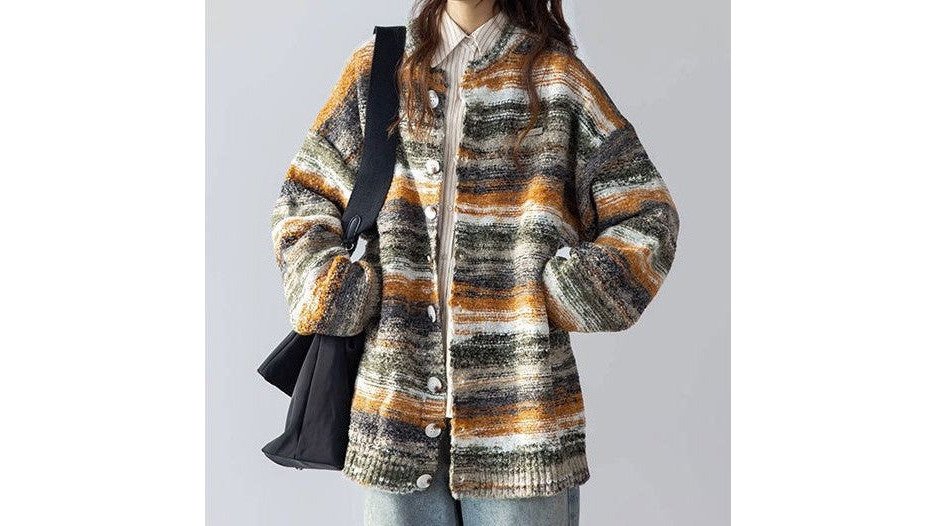
A designer coat at $800 isn't eight times better than a $100 high street coat. A high street piece at $44.10, like the Japanese Street Harajuku Style Knitted Cardigan from AmberShop21, can match designer comfort and wearability at a third of the cost.

The difference emerges by category. Outerwear and structured pieces justify designer investment because construction affects longevity and fit.
Use cost per wear as your metric. A $47.22 Men's Retro Loose Fit Jacket worn 80 times costs $0.59 per wear; a $400 designer jacket worn 100 times costs $4 per wear.
How to Spot Quality Clothing Before You Buy
Most shoppers judge a garment by price and hanger appeal. That's the wrong order. Quality is observable before you spend a dollar, and these checks take under two minutes per piece.
Fabric and Material Durability
Read the fiber percentages, not just the names. A "wool blend" that's 8% wool and 92% acrylic pills and loses shape faster than a 60/40 blend at the same price.
Weight matters as much as composition. Compare two sweaters of similar size: the heavier one usually has denser knitting that resists stretching. Stretch a sleeve and release it; if it snaps back, the knit has good recovery. If it stays stretched, it will bag out by mid-October.
Care requirements are part of the true cost. A hand-wash-only cashmere blend may cost $8-$15 per dry-clean visit, while machine-washable cotton costs nothing extra. Over a 90-day season with biweekly cleaning, that gap can exceed the purchase price. Check the care tag before the price tag.
Seams, Hems, and Construction Details
Turn the garment inside out. This is where the real quality signal lives.
- Seam type: Look for double-stitched or overlocked seams at stress points (underarms, shoulders, crotch, side seams). Single-stitch seams on a knit that will be pulled on and off daily are a warning sign.
- Seam allowance: The fabric between the stitch line and the raw edge should be at least 1/4 inch on wovens. Narrow allowances split under tension and leave no room for tailoring.
- Hem finish: A clean, folded hem that lies flat is a good sign. A raw, serged-only hem on a visible edge will fray within a season.
- Buttons and zippers: Plastic buttons that feel light and hollow crack; metal or resin buttons with a solid shank last. Test the zipper three or four times in the fitting room. If it catches on the first try, it will fail under daily use.
- Lining: On coats and jackets, a full lining in a smooth fabric (polyester taffeta or cupro) makes the garment easier to put on and protects the outer shell. An unlined or half-lined coat is lighter but wears faster at the shoulders.
Fit, Sizing Consistency, and Returns
Fit is the most underrated quality variable. A well-made garment that doesn't fit your shoulders or rise correctly sits in your closet, driving cost per wear toward infinity regardless of price.
Sizing varies between retailers and even seasons. Before ordering online, check the specific garment's size chart, not the brand's general chart, and read recent fit reviews. If a retailer charges for return shipping, factor it in: a $45 sweater with a $7 return fee is a $52 sweater.
A Quick Like-for-Like Comparison
Apply the same criteria across categories rather than assuming high street is uniformly worse or better than designer:
| Category | What to check | Where high street usually wins | Where premium usually wins |
|---|---|---|---|
| Coats and outerwear | Lining, seam allowance, wool percentage | Price per season | Longevity, tailoring, resale |
| Knitwear | Fiber content, knit density, recovery | Color range, cost per wear | Pilling resistance, shape retention |
| Boots | Sole construction, leather vs. synthetic upper | Trend responsiveness | Resoling, waterproofing |
| Basics (tees, tanks) | Stitch density, hem finish | Replacement cost | Fit consistency |
Run this check on three pieces before you buy anything else this fall. You'll quickly develop a feel for which retailers consistently pass and which ones only look good in photos.
Fall Wardrobe Essentials That Deliver Value
Certain pieces anchor a fall wardrobe because they work across multiple outfits. These aren't trend pieces; they're foundational items you'll wear repeatedly.
A quality knit is the backbone of fall layering. The Japanese Street Harajuku Style Knitted Cardigan at $44.10 works standalone or as a layering base.
Outerwear deserves attention. The European And American Foreign Trade Apparel Winter Sweater Jacket at $24.12 uses hemp-blended fabric with plus velvet lining for genuine cold-weather wear. The hooded design and drawstring placket add function beyond aesthetics, protecting you while looking intentional.
Japanese Street Harajuku Style Knitted Cardigan →

Denim forms the foundation of most fall rotations. The Street-style Vintage Washed Blue Jeans at $25.47 use denim with slight stretch, a mid-rise waist, and a straight-leg silhouette that works across body types.
Expensive-Looking Affordable Clothes: The Cost Per Wear Strategy
The most effective high street strategy isn't finding the cheapest options. It's identifying pieces that look and feel more expensive than their price tag, then wearing them often enough to justify the investment.
The Cool Style Street Style Retro Dark Sweater at $30.12 exemplifies this. Black cotton with a round neck and long sleeves reads minimalist and elevated.

Cost per wear transforms how you evaluate price. A $44 cardigan worn 100 times costs $0.44 per wear; a $200 designer cardigan worn 60 times costs $3.33.
The strategy requires honesty. Will you actually wear this piece often? Does it fit your wardrobe and lifestyle? Buying something cheap you won't wear drives cost per wear toward infinity, so no value exists.
Quality Over Quantity: Building a Fall Capsule That Lasts
A fall capsule works only if every piece earns its place through repeated wear. This section shows you how to decide what stays, using longevity and cost per wear as the filter.
Start With a Wear-Count Target
Before buying anything, set a target: each capsule piece should be worn at least 20 times between September and November, roughly twice a week for ten weeks. If you can't picture 20 outfits with it, it doesn't belong.
This rule eliminates most impulse buys. A novelty-print sweater that works with one pair of pants fails; a neutral cardigan that layers over tees, under jackets, and over dresses passes.
The Five-Piece Fall Framework
A functional fall capsule needs coverage in five slots. Fill each slot with one or two pieces, not five.
- Base layer: Two or three long-sleeve tees or lightweight knits in colors that match everything else in the capsule.
- Mid layer: One cardigan or pullover sweater that works both buttoned and open.
- Outer layer: One jacket or coat rated for your actual fall temperatures, not the ones in the catalog photos.
- Bottoms: One pair of jeans and one non-denim option (trousers, a skirt, or a heavier knit pant).
- Footwear: One pair of boots or closed-toe shoes that handle rain and walkable distances.
Five slots, five to eight pieces total. Everything else is optional and should be justified by a specific gap, not a trend.
Cost Per Wear, Done Honestly
Cost per wear is purchase price divided by the number of times you actually wear the item. Use a conservative estimate, not an optimistic one.
- A $45 cardigan worn twice a week for ten weeks: 20 wears, $2.25 per wear.
- The same cardigan worn once a week: 10 wears, $4.50 per wear.
- A $180 coat worn four times a week for ten weeks: 40 wears, $4.50 per wear.
- A $60 trend jacket worn three times all season: $20 per wear.
The expensive-looking piece isn't always the expensive one. The piece you wear least is.
Longevity and the Sustainability Case
The most sustainable fall wardrobe is the one you already own, extended. Extending a garment's life by even a few months reduces its footprint more than swapping it for a "greener" purchase. A sweater that survives three fall seasons replaces three that don't.
Practical longevity habits for fall pieces:
- Wash knits inside out in cold water and lay flat to dry. Heat and tumbling are what shrink wool and break down cotton fibers.
- Rotate footwear. Wearing the same boots every day traps moisture and accelerates breakdown; alternating two pairs roughly doubles their usable life.
- Store clean. Moths and mildew damage stored wool; clean garments before storing and use a breathable garment bag, not plastic.
- Repair before replacing. A $12 cobbler repair on a boot sole or a $10 tailor fix on a hem is almost always cheaper than a replacement.
Build the Capsule Around Your Actual Life
The capsule that works matches your week. If you commute on foot, prioritize weatherproof footwear and a lined coat. If you work from home, prioritize layers for indoors and out. If you dress up twice a week, one structured piece earns its slot; if you never do, it doesn't.
Write down the five slots, fill them with pieces that pass the 20-wear test and cost-per-wear math, and stop there. A capsule isn't a smaller wardrobe for its own sake; it's a wardrobe where every piece is worth what you paid.
Frequently Asked Questions
Is high street fashion worth buying for fall?
High street fashion can be worth it for fall if you focus on versatile pieces with strong construction and neutral colors that work across multiple outfits. The key is calculating cost per wear, a $40 sweater worn 50 times over two seasons costs less per wear than a $150 designer piece worn 10 times. Look for pieces that layer well and transition across seasons, and prioritize quality fabrics like cotton and blended materials over thin synthetics.
How can you tell if high-street clothing is good quality?
Check the fabric composition first, cotton, hemp blends, and quality polyester hold up better than cheap synthetics. Examine seams closely: they should be straight, tight, and reinforced at stress points like armholes and pockets. Test the weight and feel of the fabric; quality pieces have substance and don't feel papery. Look at hems and edges for even stitching, and check that buttons and zippers move smoothly. Try items on when possible to assess fit consistency, as high-street sizing can vary significantly between brands.
What fall fashion pieces are worth investing in?
Invest in layering basics like well-fitted sweaters and cardigans that work year-round, quality denim that fits your body shape, and outerwear like hooded jackets or retro-style coats. These pieces form the foundation of a fall wardrobe and get worn repeatedly, making cost per wear reasonable. Neutral colors, black, camel, navy, coffee, offer maximum versatility. Avoid trendy statement pieces in high street ranges unless they're under $30, since trends shift quickly and lower-priced items may not hold up to frequent wear.
How do you make affordable fall clothes look expensive?
Pair high-street basics with quality accessories and ensure proper fit, tailoring a $25 pair of jeans can elevate the entire outfit. Layer thoughtfully using texture contrast, like a chunky knit cardigan over a fitted sweater. Stick to a cohesive color palette of 2-3 autumn colors like camel, black, and cream. Choose well-constructed basics in neutral tones over trendy printed pieces, and prioritize silhouettes that flatter your body. Investing in one or two elevated pieces to mix with affordable items creates visual balance and perceived quality.


