

Is Gold Plated Jewelry Worth Buying in 2026
Table of Contents
- What Gold Plated Jewelry Is and How It's Made
- Gold Plated vs Gold Filled: Key Differences
- How Long Does Gold Plated Jewelry Last
- Gold Plated Jewelry Pros and Cons
- How to Care for Gold Plated Jewelry
- Is Gold Plated Jewelry Worth Buying: The Verdict
- Gold Plated Jewelry Options at AmberShop
- Frequently Asked Questions
Last Updated: October 12, 2026
What Gold Plated Jewelry Is and How It's Made
Gold plated jewelry is an affordable way to achieve the look of solid gold: a thin layer of gold electroplated onto a base metal core, usually brass, copper, or stainless steel. An electrical current passes through a solution of gold ions, bonding the gold layer to the base metal.

Plating thickness matters: most gold plated jewelry ranges from 0.5 to 2.5 microns, which affects how long it lasts and resists wear. Thicker plating means longer durability but higher cost, helping you decide whether gold plated jewelry is worth buying for your lifestyle and budget.
The appeal is clear: the aesthetic of gold at a fraction of solid gold prices, an accessible entry point for shoppers who rotate accessories with seasonal trends.
Gold Plated vs Gold Filled: Key Differences
The key difference is longevity. Gold filled pieces last 10-30 years or more with normal wear, while gold plated jewelry typically lasts 1-3 years depending on wear and care. Gold filled costs more upfront but offers better long-term value for regular wear.
Gold vermeil sits between the two: gold plated over sterling silver with a minimum 2.5-micron thickness. It's more durable than standard plating and more affordable than solid gold or gold filled, though it still requires careful maintenance.
For everyday wear, gold filled is better if budget allows; for occasional or trendy pieces, gold plated makes sense.
How Long Does Gold Plated Jewelry Last
Lifespan is set by four variables: plating thickness, base metal, wear frequency, and exposure to moisture and chemicals. Change one and the same piece can last six months or six years.
Plating thickness is the biggest lever. Plating is measured in microns (one-thousandth of a millimeter). Standard fashion plating runs 0.5 to 2.5 microns; heavy plating sits at the top of that range. Vermeil must be at least 2.5 microns of gold over sterling silver. The practical translation:
- 0.5 micron, daily wear: visible fading often begins within 3-6 months.
- 1 micron, daily wear: typically 6-12 months before base metal shows through.
- 2.5 microns, daily wear: commonly 1-2 years of regular wear.
- 2.5 microns, occasional wear (once or twice a month): often 3-5 years or longer.
Base metal matters almost as much. Brass and copper are affordable but tarnish and can leave green or black marks on skin once exposed. Stainless steel and titanium resist tarnish better and suit sensitive skin.
What accelerates the fade. Sweat, perfume, hairspray, lotion, sunscreen, chlorine, saltwater, and abrasive cleaning strip or dull the gold layer.
Cost-per-wear: the comparison that actually answers the value question. Cost-per-wear is purchase price divided by the realistic number of wears. Here is how the categories stack up using typical U.S. retail ranges:
| Category | Typical Price | Realistic Wears | Cost Per Wear |
|---|---|---|---|
| Thin gold plated (0.5 micron) | $20-$40 | ~150-300 | $0.10-$0.25 |
| Heavy gold plated (2.5 micron) | $40-$80 | ~400-700 | $0.08-$0.18 |
| Gold vermeil | $60-$150 | ~700-1,200 | $0.08-$0.20 |
| Gold filled | $50-$200 | ~2,000-5,000 | $0.02-$0.10 |
| Solid 14K gold | $200-$1,500+ | Effectively unlimited | Approaches $0 over decades |
Gold plated jewelry is not automatically the cheapest per wear. Gold filled often wins because it lasts far longer despite the higher upfront cost.
The break-even question. If a $25 plated piece lasts one year and a $120 gold-filled piece lasts ten, the plated piece costs $250 over the decade if replaced yearly, versus $120.
A note on warranties. Some U.S. retailers offer a 6-12 month plating warranty, but most exclude damage from water, sweat, perfume, and chemicals, exactly how plating fails. A warranty excluding normal wear isn't much of one.
Gold Plated Jewelry Pros and Cons
Pros:
Gold plated jewelry offers genuine advantages for the right use case. Affordability is the obvious win: multiple pieces for the price of one solid gold item, matching outfits and experimenting with styles.
There's also less pressure to protect a piece. Wear it to the gym, on vacation, or to casual events without solid-gold anxiety. If it's lost or damaged, the financial loss is minimal.
Cons:
The durability limitation is real. Gold plated jewelry fades with regular wear, exposing the base metal, and once tarnishing begins it looks worn and often can't be easily restored. Unlike solid gold, it has virtually no resale value.
Replating often costs nearly as much as a new piece, making it impractical. For heirloom-quality or daily-wear jewelry, gold plated is the wrong choice.
| Aspect | Gold Plated | Gold Filled | Solid Gold |
|---|---|---|---|
| Typical Lifespan | 1-3 years | 10-30 years | Lifetime |
| Price Range | $20-50 | $50-200 | $200+ |
| Best For | Occasional wear, trends | Regular wear, everyday | Investment, heirloom |
| Resale Value | None | Minimal | Significant |
| Durability | Fades with wear | Highly durable | Extremely durable |
How to Care for Gold Plated Jewelry
Most care advice repeats three tips: keep it dry, clean it gently, store it separately. Those are correct, but this section focuses on what actually protects your money: how to read a product listing before you buy, and what to do when the plating wears off.
The buying checklist: verify before you pay
Before you buy any gold plated piece, check these five things:
Fashion 18K Gold Plated Jewelry Set →
- Base metal. Look for brass, copper, stainless steel, sterling silver, or alloy. "Alloy" alone usually means a brass or copper blend. Stainless steel and sterling silver are the most skin-friendly and tarnish-resistant.
- Plating thickness in microns. If the listing doesn't state microns, that's a signal. Reputable sellers of heavy plating advertise it ("2.5 micron," "heavy gold electroplate"). No number means assume thin plating.
- Gold karat of the plating. "18K gold plated" means the plating layer is 18K gold, not the whole piece. 14K and 18K plating both look warm and gold-like; 24K is softer and wears faster.
- Warranty terms. Look for a stated plating warranty and read the exclusions. One that voids on water contact is nearly useless for everyday wear.
- Care instructions. A seller who explains how to care for the piece usually expects it to last. Silence is a yellow flag.
Care that actually extends lifespan
The fundamentals still matter:
- Remove before water. No showers, swimming, dishes, or workouts. Chlorine and saltwater are especially hard on plating.
- Last on, first off. Perfume, lotion, sunscreen, and hairspray go on before the jewelry. Let products dry completely first.
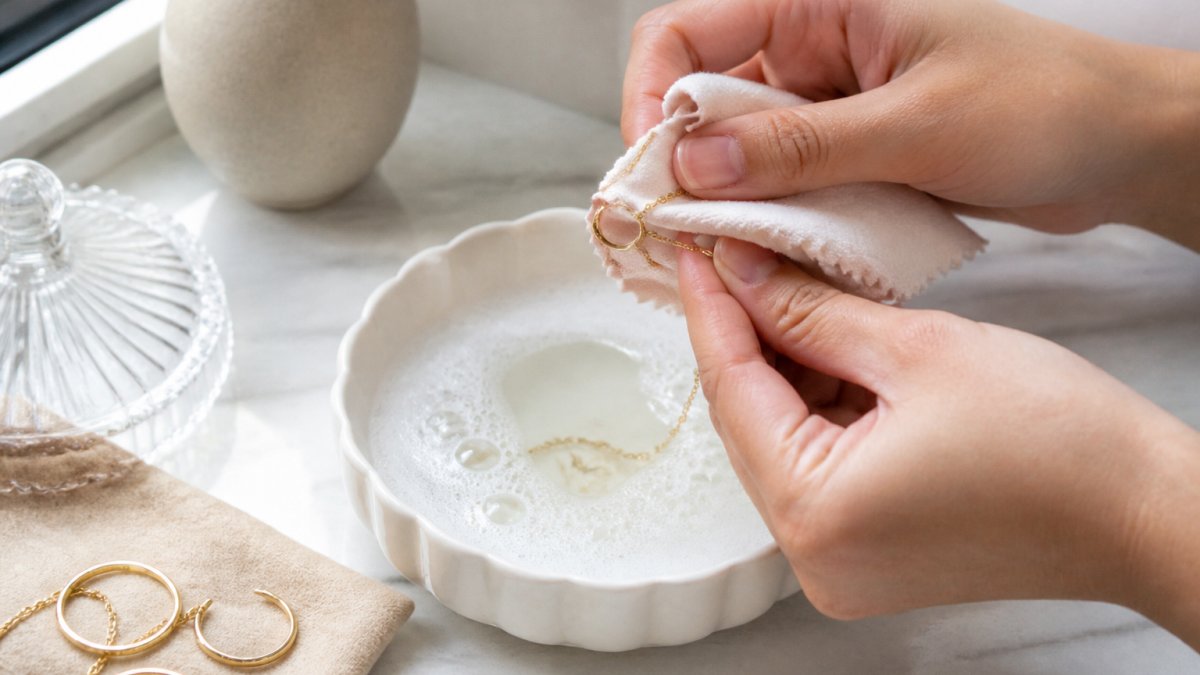
- Clean gently. Mild dish soap, lukewarm water, soft cloth. No ultrasonic cleaners, solid-gold polishing cloths, or abrasives, which strip the plating.
- Dry fully. Water spots and trapped moisture accelerate tarnish. Pat dry with a microfiber cloth.
- Store individually. A soft pouch or lined box per piece. Pieces rubbing together in a shared dish wears plating off fast.
What to do when the plating wears off
When the gold layer thins and the base metal shows, you have three options, and usually only one makes financial sense.
Option 1: Replate it. A jeweler strips the old plating and electroplates a new gold layer, typically $30-$75 per piece for simple items, more for complex settings or chains.
Option 2: Replace it. For most fashion-priced gold plated jewelry, this is rational. The piece did its job, you got your cost-per-wear, and you buy a new one in the current style.
Option 3: Retire it. If it has sentimental value but isn't worth replating, clean it, store it, and stop wearing it. Exposed base metal can cause skin irritation and green discoloration, especially with brass or copper cores.
Skin sensitivity and the base metal question
If you have a nickel allergy or sensitive skin, the base metal is the risk, not the gold. Nickel, a common allergen in many brass and alloy blends, can contact skin once plating wears through. Stainless steel and sterling silver bases are safer, and gold-filled jewelry avoids the problem almost entirely because its gold layer outlasts normal wear.
The bottom line on care
Care extends lifespan but doesn't change the category. A well-cared-for plated piece lasts longer than a neglected one but still eventually wears. The real value move: buy with your eyes open, verify base metal and plating thickness, match the piece to how you'll actually wear it, and treat replating as a math problem, not an emotional one.
Is Gold Plated Jewelry Worth Buying: The Verdict
Whether gold plated jewelry worth buying depends on your expectations and use case. For affordable, trendy pieces to rotate seasonally or wear occasionally, it makes sense: excellent cost-per-wear, the aesthetic of gold without investment risk, and freedom to experiment without financial regret.
For pieces worn daily, passed down, or kept polished for years, gold plated isn't right. Gold filled or solid gold are better long-term investments.
The key is honest self-assessment. Will you wear it regularly or leave it in a drawer? Do you want decades of wear or are you fine replacing it in 1-2 years? Is this a trend or a timeless style?
For most fashion-conscious shoppers in their 20s to 40s who enjoy updating their style, gold plated jewelry is worth buying as long as you understand its lifespan and care for it properly.
Gold Plated Jewelry Options at AmberShop
At AmberShop, we believe beautiful jewelry shouldn't require a luxury budget. Our curated gold plated jewelry sets elevate your everyday style with pieces designed for comfortable, quality wear.
The Fashion 18K Gold Plated Jewelry Set ($22.62) delivers a four-piece collection, necklace, earrings, ring, and bracelet, in 18K gold plating over alloy with diamond processing technology.
If you prefer electroplated finishes, the Fashion Necklace Bracelet Earrings Ring Jewelry Set ($22.62) offers the same four-piece combination.

For stacking rings, the Fashion Joint Ring Set Electroplating 18K Gem Jewelry ($21.25) includes four rings in 18K electroplated alloy with diamond processing. The circumference range (51-80cm) accommodates various finger sizes.
For gemstone accents, the Fashion Alloy Hollow Textured Diamond Necklace Earrings Bracelet Ring Jewelry Set ($22.58) combines gold plating with gold inlaid gems and a multi-layered design.
Each set reflects that gold plated jewelry is about accessible style and self-expression.
Frequently Asked Questions
How long does gold plated jewelry last with everyday wear?
Gold plated jewelry typically lasts 1-3 years with regular everyday wear, depending on plating thickness and care. Thicker plating (2-5 microns) lasts longer than thin plating (0.5-1 micron). The base metal underneath shows through once the gold layer wears away. Pieces worn occasionally can last 5+ years. Proper storage and gentle cleaning extend lifespan significantly.
What's the difference between gold plated and gold filled jewelry?
Gold plated jewelry has a thin layer of gold (typically 0.5-5 microns) bonded to a base metal using electroplating. Gold filled has a thicker gold layer (at least 5% by weight) mechanically bonded to the base. Gold filled lasts 10-30 years with care, while gold plated typically lasts 1-3 years. Gold filled costs more but offers better durability and resale value for pieces you plan to wear long-term.
Is gold plated jewelry worth buying if I wear jewelry daily?
Gold plated jewelry works well for daily wear if you accept that it will fade or flake eventually. For pieces you want to last years without replating, gold filled or solid gold is better. Gold plated is worth buying for trendy styles, affordable fashion pieces, or testing a look before investing in solid gold. AmberShop's 18K gold plated sets ($21.25-$22.89) offer great value for rotating seasonal jewelry or everyday fashion pieces.
Can you repair or replate gold plated jewelry?
Yes, gold plated jewelry can be replated by a jeweler, though costs vary ($15-$50+ depending on piece size and complexity). Replating works best on well-made pieces with solid bases. Cheap costume jewelry often isn't worth replating. Before replating, consider whether the piece is still structurally sound. For fashion jewelry you've outgrown, buying new pieces is often more economical than replating old ones.
Gold plated jewelry is worth buying when you approach it with realistic expectations. For affordable, stylish pieces that let you express your unique aesthetic without luxury price tags, AmberShop's curated collection delivers exactly that. View all our gold plated jewelry sets and find the pieces that make you feel confident and beautiful every day.


