

How to Spot Quality Fashion Jewelry Online
Table of Contents
- What You'll Need Before You Start
- Step 1: Examine Product Photography and Zoom Features
- Step 2: Understand Metal Hallmarks and How to Tell If Jewelry Is Gold Plated or Vermeil
- Step 3: Evaluate Gemstone Quality and Craftsmanship
- Step 4: Check for Secure Settings and Prongs
- Step 5: Verify Seller Reputation and Return Policies
- Best Metals for Sensitive Skin Jewelry and How to Care for Fashion Jewelry to Prevent Tarnishing
- Common Mistakes to Avoid When Buying Fashion Jewelry Online
- Frequently Asked Questions
Last Updated: September 23, 2026
What You'll Need Before You Start
Spotting quality fashion jewelry online requires a computer or phone with accurate color display, a magnifying glass or jeweler's loupe, and a browser tab for researching seller reviews and certifications.
Most importantly, take time to examine product photos closely. The difference between a durable piece and one that tarnishes in weeks often comes down to small details you catch upfront.
Step 1: Examine Product Photography and Zoom Features
Quality fashion jewelry online requires clear, detailed photos with zoom capability and multiple angles (front, back, sides). Examine the clasp, settings, and joints, these reveal craftsmanship. Natural lighting shows true colors; harsh shadows hide flaws. Fuzzy photos or single angles are red flags.
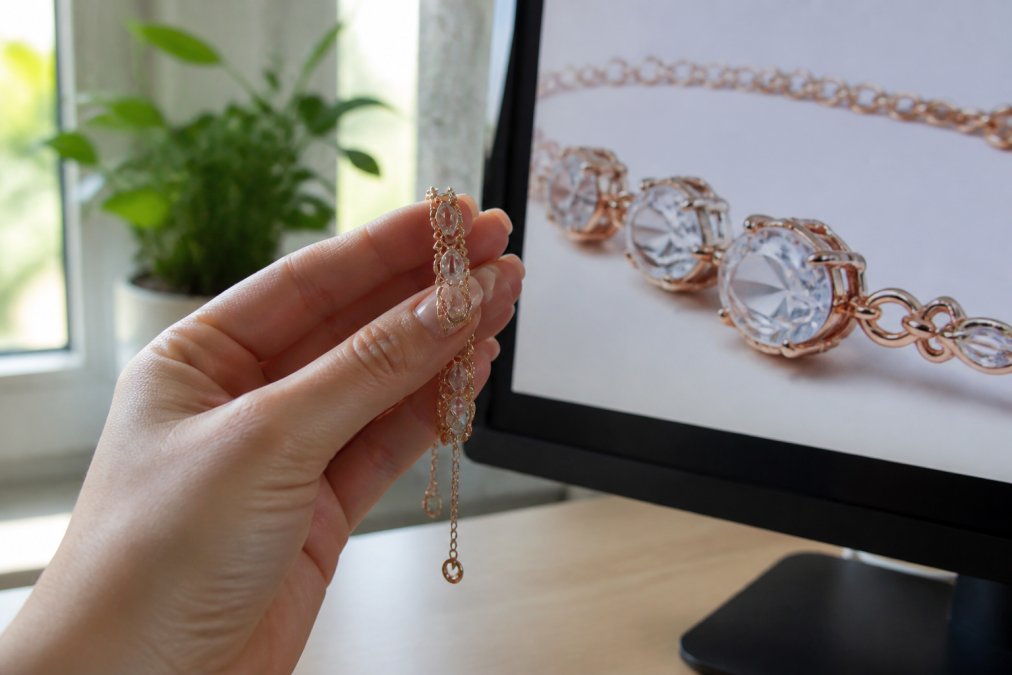
Macro-Photography Analysis: What to Look For in High-Resolution Zoom
When you zoom into product photos, you're looking at the piece at 3-5x magnification or higher. This reveals defects invisible to the naked eye. Learn to spot these telltale signs of poor craftsmanship:
Casting bubbles and pits appear as small, irregular holes in the metal surface. Quality pieces have smooth, uniform surfaces. Visible pitting suggests poor quality control and potential breakage under stress.
Solder joints connect metal pieces. In quality jewelry, they're invisible or nearly invisible, smooth and flush. Poor solder work shows as visible seams, bumps, or discolored lines, indicating structural weakness.
Plating thickness can be inferred from zoom photos. Look at ring edges, clasp interiors, or wear points. If base metal is visible at edges, plating is extremely thin and will wear through quickly. Quality plating appears consistent even at edges.
Stone setting gaps are critical. Zoom in on where the stone meets the metal. There should be no visible gap between the stone and the prong or bezel. Gaps indicate the stone is not secure and may fall out. Also look for uneven prong spacing, prongs should be evenly distributed around the stone.
Digital Authentication and Serial Number Verification
Before purchasing, ask the seller if they provide serial number photos, QR codes linking to authenticity certificates, or third-party verification. If a seller cannot or will not provide this documentation, it's a warning sign. Quality sellers embrace transparency.
Lifestyle photos show how pieces look when worn, but don't rely on them alone. A skilled photographer can make a cheap piece look expensive. Use photos to spot obvious flaws and combine inspection with the steps below.
Step 2: Understand Metal Hallmarks and How to Tell If Jewelry Is Gold Plated or Vermeil
Metal hallmarks are tiny stamps revealing metal type and purity. Sterling silver carries a "925" stamp (92.5% pure silver). Gold plated jewelry has a thin gold layer over base metal; look for "GP" markings. Gold vermeil is gold plating over sterling silver, superior to gold plating over cheap metals.

Check stamp locations on ring interiors, bracelet clasps, or earring posts. Reputable sellers photograph these clearly. If you can't see a hallmark, ask the seller directly.
Karat markings appear on solid gold: "14K" (58.5% pure) and "18K" (75% pure). For affordable fashion jewelry, 14K gold or gold vermeil offers good balance. Be skeptical of pieces with no visible hallmarks, quality sellers always show them.
Rhodium plating is a protective coating on white gold and silver that prevents tarnishing. Look for mentions in product descriptions, it signals seller knowledge of metal care.
Step 3: Evaluate Gemstone Quality and Craftsmanship
Gemstone clarity affects light refraction and sparkle. Genuine stones sparkle distinctly; imitation stones look flat or dull. Check for gemstone certification (GIA or IGI) when buying higher-end pieces, sellers mention this prominently.
Carat weight and clarity matter for diamonds. Visible inclusions (black spots, cloudiness) indicate lower clarity. Craftsmanship shows in stone settings: prongs should be smooth and evenly spaced; bezels should fit snugly. Examine solder joints, they should be smooth and invisible. Look for casting defects (pits, bubbles, rough spots) that suggest poor manufacturing.
Step 4: Check for Secure Settings and Prongs
Inspect how stones are held in place. Prongs should grip firmly with no gaps. If you receive the piece, gently test the stone, it should not move. If it wiggles, return it immediately.
Clasp security is critical, it should be sturdy and close smoothly. Check for sharp edges where metal meets skin; quality pieces are finished smoothly. Overall construction should be solid with no loose parts or weak connections.
Step 5: Verify Seller Reputation and Return Policies
A reputable seller offers detailed return policies (30+ days) and stands behind products. Check customer reviews for patterns about photo accuracy, materials, and durability. Ask about authenticity guarantees or appraisals, confident sellers welcome questions. Look for industry certifications. Responsive communication and simple return processes suggest confidence in quality.
925 Sterling Silver Fashion Ring for →
Best Metals for Sensitive Skin Jewelry and How to Care for Fashion Jewelry to Prevent Tarnishing
Metals for Sensitive Skin and Longevity Trade-offs
Sterling silver (925 purity) is excellent for sensitive skin. The 925 standard means minimal irritants and no nickel. However, sterling silver tarnishes over time. This is normal and doesn't mean low quality, but it does mean ongoing maintenance. If you wear sterling silver daily without removing it, expect to polish it every 2-4 weeks to maintain shine. If you wear it occasionally and store it properly, you may only polish it 2-3 times per year. Understand this trade-off upfront.
Nickel-free metals prevent allergic reactions. Look for this label explicitly. Many cheap metals contain nickel, which causes irritation in 10-15% of the population. Quality sellers specify nickel-free construction. However, nickel-free doesn't guarantee durability. A nickel-free brass piece can still tarnish or wear through plating quickly. Nickel-free is about skin safety, not longevity.
Gold vermeil (gold plating over sterling silver) works well for sensitive skin because both metals are hypoallergenic. Vermeil offers the look of gold without the high cost. However, the gold layer will wear through with heavy daily wear, typically within 6-12 months of constant wear. If you wear vermeil jewelry occasionally (2-3 times per week), it may last 2-3 years. This is normal and expected. Budget for re-plating or replacement.
Solid 14K gold is the most durable option for sensitive skin. It does not tarnish and does not require replating. The trade-off is cost. 14K gold is significantly more expensive than vermeil or sterling silver. For fashion jewelry, 14K gold is typically reserved for pieces you plan to wear for years.
Stainless steel (surgical grade, 316L) is hypoallergenic and extremely durable. It resists tarnishing and corrosion. Stainless steel is an excellent choice for everyday wear and sensitive skin. The downside: stainless steel is harder to work with, so fewer fashion jewelry designs are available in stainless steel compared to silver or gold-plated options.
Longevity Expectations by Material and Wear Pattern
Understanding how long a piece will actually last depends on both material and how often you wear it:
Gold-plated fashion jewelry (gold over brass or copper base): Expect 3-6 months of daily wear before visible wear-through. For occasional wear (1-2 times per week), expect 1-2 years. This is the most affordable option but requires the most maintenance or replacement.
Gold vermeil (gold over sterling silver): Expect 6-12 months of daily wear. For occasional wear, expect 2-3 years. Vermeil is more durable than simple gold plating because the base metal is sterling silver, not cheap brass.
Sterling silver with rhodium plating: Expect the rhodium coating to last 1-2 years with daily wear. Once it wears off, the silver underneath will tarnish but remains wearable. Rhodium plating can be reapplied for $15-$40 per piece. Without replating, expect to polish the piece every 2-4 weeks.
Solid 14K gold: Expect 5+ years of daily wear with minimal maintenance. 14K gold does not tarnish or require replating. It may scratch with heavy wear, but scratches do not compromise the metal. This is the longest-lasting option.
Care Practices That Extend Longevity
To prevent tarnishing and extend the life of any piece:
Storage: Keep pieces in a dry place. Use airtight containers or jewelry boxes with anti-tarnish strips. Avoid humid bathrooms. Moisture accelerates tarnishing. If you store pieces for months, include a silica gel packet to absorb moisture.
Cleaning: Clean regularly to maintain shine. Use a soft cloth and mild soap. Avoid harsh chemicals, ultrasonic cleaners, and abrasive materials. Gentle cleaning keeps pieces looking new without damage.
Common Mistakes to Avoid When Buying Fashion Jewelry Online
Don't assume low price means low quality. Many affordable pieces are well-made. Conversely, high price doesn't guarantee quality. Focus on the factors above, not the price tag alone.
Frequently Asked Questions
How can you tell if gold-plated jewelry will tarnish quickly?
Gold-plated pieces tarnish faster when the base metal is low-quality or the plating layer is too thin. Look for product descriptions that specify plating thickness (measured in microns) and the base metal used. Sterling silver and brass bases resist tarnishing better than cheaper alloys. Check seller reviews for mentions of tarnishing timelines. Pieces from reputable sellers typically include care instructions that extend longevity. AmberShop's 925 sterling silver pieces, for example, are made with 925 Sterling Silver.
What materials indicate high-quality fashion jewelry?
Sterling silver (marked 925), gold vermeil over sterling silver, and surgical-grade stainless steel are hallmarks of quality fashion jewelry. Avoid pieces made from cheap alloys or unspecified base metals. Look for hallmark stamps on the item itself, not just in the product description. Tungsten carbide and quality gemstone settings also signal durability. Product listings that clearly state material composition, karat weight (for gold), and metal purity demonstrate seller transparency and confidence in their craftsmanship.
What should you look for in jewelry product photography when shopping online?
Quality listings include multiple angles, close-up macro shots showing surface finish and solder joints, and images against neutral backgrounds. Zoom-enabled photos let you inspect prong settings and clasp security before buying. Look for photos showing the piece worn or held in hand for scale. Avoid listings with only one blurry image or heavily filtered photos that hide details. Reputable sellers like AmberShop provide clear, detailed photography.
How do you verify the authenticity of jewelry brands and sellers online?
Check for GIA, IGI, or other recognized gemstone certifications listed in product descriptions. Read customer reviews specifically mentioning material durability and whether items matched photos. Verify return policies are clearly stated and reasonable (at least 30 days). Look for seller contact information, physical business details, and clear warranty terms. Reputable sellers display certifications, use professional product descriptions, and respond to customer questions. AmberShop's curated collection comes with transparent material specifications and accessible customer service.


