

How to Prevent Gold Jewelry from Tarnishing
Table of Contents
- Why Gold Jewelry Tarnishes: Understanding the Chemistry
- Best Storage for Gold Jewelry to Prevent Tarnish
- How to Clean Gold Plated Jewelry Without Damage
- Does 14k Gold Tarnish in Water and How to Protect It
- Step-by-Step Daily Care Routine for Gold Pieces
- Long-Term Storage Protocols for Precious Pieces
- Solid Gold vs. Gold Plated: What Tarnishes Faster
- Frequently Asked Questions
Last Updated: September 28, 2026
Why Gold Jewelry Tarnishes: Understanding the Chemistry
Gold jewelry tarnishes when the metal reacts with elements in the air and on your skin. Understanding how to prevent gold jewelry from tarnishing starts with knowing what causes the problem in the first place. Pure gold doesn't tarnish, but most jewelry pieces contain alloys that do. These mixed metals oxidize when exposed to moisture, sulfur compounds, and chemicals.
The tarnish you see is a chemical reaction. Oxygen combines with base metals in your gold alloy. This creates a dull, discolored layer on the surface. The process happens faster in humid environments and with frequent contact.
When you understand what triggers tarnish, you can take targeted steps to prevent it.
How Sweat, Perfumes, and Lotions Speed Up Oxidation
Your skin chemistry directly impacts how fast your gold tarnishes. Sweat contains salts and acids that accelerate the oxidation process. When sweat sits on your jewelry, it creates the perfect environment for tarnish to form.
Perfumes and lotions are equally problematic. Many contain alcohol and chemical compounds that strip protective coatings. They also leave a residue that traps moisture against the metal. This combination speeds up corrosion significantly.
Cosmetics pose another risk. Makeup foundations, powders, and sunscreens build up on jewelry over time. They create a barrier that holds sweat and humidity against the surface.
The solution is simple: remove your jewelry before applying these products. Wait until perfume dries completely. Let lotion absorb fully into your skin. This single habit prevents most tarnish problems.
The Role of Alloy Composition in Tarnish Resistance
Not all gold alloys tarnish at the same rate. The metals mixed with gold determine how quickly oxidation happens. 14-karat gold contains 58% pure gold and 42% other metals like copper, silver, or nickel. These base metals are what tarnish, not the gold itself.
10-karat gold has even more alloy content, making it tarnish faster than 14-karat pieces. 18-karat gold contains 75% pure gold, so it resists tarnish better. 24-karat pure gold doesn't tarnish at all, but it's too soft for everyday jewelry.
Copper in the alloy is the primary culprit. It oxidizes quickly and creates that dark discoloration. Some jewelers add rhodium plating to protect the surface. This thin coating prevents the base metals from contacting air and moisture.
Quality matters here. Better alloy compositions and thicker protective coatings mean less tarnish. When shopping for pieces that will last, ask about the alloy mix and whether rhodium plating is included.
Best Storage for Gold Jewelry to Prevent Tarnish
How you store your gold jewelry determines how long it stays bright. The right storage conditions can prevent tarnish for years. Poor storage accelerates the problem dramatically.
Temperature and humidity are the two critical factors. Stable, dry conditions slow oxidation to a crawl. Fluctuating temperatures and high humidity speed it up.
Humidity Control and Air Circulation
Moisture is the enemy of gold jewelry. High humidity creates the perfect conditions for chemical reactions. Aim to store your pieces in areas with humidity below 50%.
Basements and bathrooms are terrible storage locations. Bathrooms have constant moisture from showers. Basements stay damp year-round. Bedrooms and closets are much better choices.
Use airtight storage containers to control humidity. Sealed boxes, bags, or cases keep moisture out. Avoid open jewelry boxes or exposed display cases. These allow humidity to reach your pieces constantly.
Anti-humidity packets help too. Silica gel packets absorb moisture from the air inside closed containers. Replace them every few months as they become saturated.
Air circulation matters when you're not storing pieces. Don't pile jewelry on top of each other in drawers. Give each piece space to breathe. This prevents moisture from being trapped between items.
Anti-Tarnish Strips and Protective Coatings
Anti-tarnish strips are a simple, effective tool. These strips contain activated charcoal or other compounds that absorb sulfur and moisture. Place one strip in your storage container with your jewelry.
The strips work by creating a protective microenvironment. They neutralize the gases that cause oxidation. Most strips last 3-6 months before needing replacement.
Protective lacquer coatings provide another layer of defense. Some jewelers apply a clear nitrocellulose coating to gold pieces. This seals the surface and prevents direct contact with air and moisture. It's especially common on gold-plated jewelry.
These coatings aren't permanent. They wear away with time and handling. When the coating breaks down, tarnish can develop underneath. Professional jewelers can reapply coatings when needed.
Combine methods for best results. Use anti-tarnish strips in sealed storage containers. This double approach keeps your jewelry protected for extended periods.
How to Clean Gold Plated Jewelry Without Damage
Gold-plated jewelry requires gentler care than solid gold. The plating is thin, usually just a few microns thick. Aggressive cleaning can strip it away entirely.
The key is using soft materials and mild solutions. Harsh chemicals and abrasive cloths damage the delicate surface layer.
Safe Cleaning Methods Using Microfiber Cloth
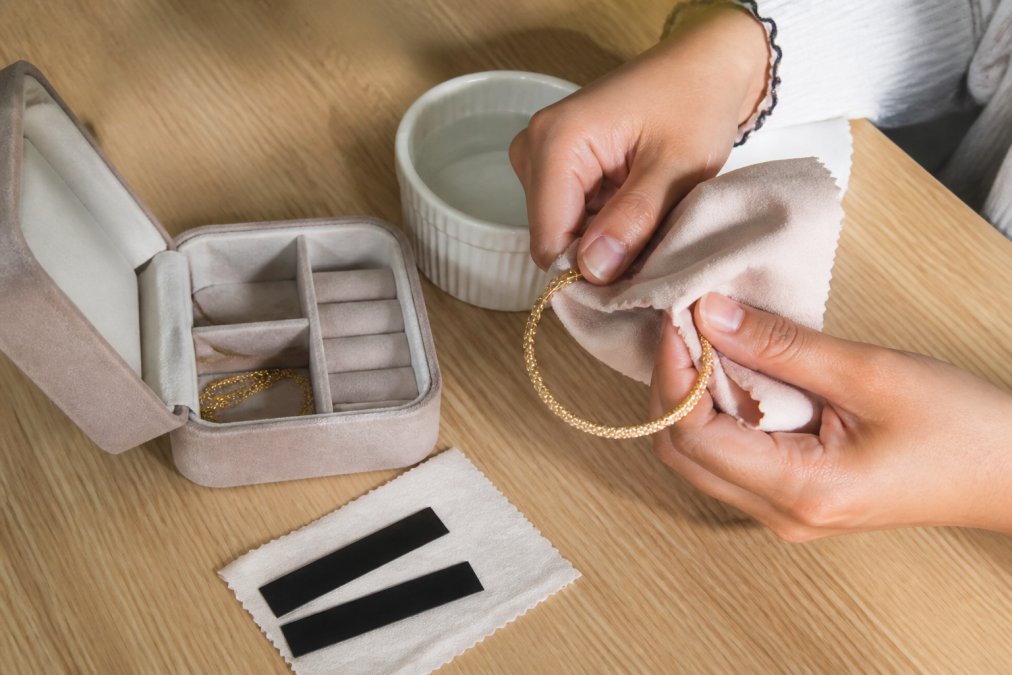
A microfiber cloth is your best tool for daily cleaning. These cloths are soft enough to polish without scratching. They remove fingerprints, dust, and light tarnish in seconds.
Gently wipe your jewelry with a dry microfiber cloth after wearing it. This removes sweat and oils before they dry on the surface. Do this regularly to prevent buildup.
For light tarnish, use a slightly damp microfiber cloth. Water alone works fine. Never use hot water, it can damage some settings and accelerate tarnish in crevices.
For stubborn tarnish, make a gentle cleaning solution. Mix warm water with a tiny drop of mild dish soap. Dip the microfiber cloth in the solution and wipe the jewelry. Rinse with clean water and dry immediately with another soft cloth.
Never soak gold-plated jewelry. Water seeping under the plating can cause it to lift and peel. Keep contact time short. Dry immediately after cleaning.
Avoid these common mistakes:
- Toothbrushes (too abrasive)
- Commercial jewelry cleaners (too harsh for plating)
- Vinegar or lemon juice (acidic and damaging)
- Ultrasonic cleaners (can strip plating)
Professional Cleaning vs. DIY Restoration
DIY cleaning works well for light tarnish and regular maintenance. You can keep your jewelry looking good between professional cleanings. However, there are limits to what home methods can achieve.
Professional jewelers have specialized equipment and solutions. They can remove heavy tarnish without damaging the piece. They can also inspect for loose settings or structural problems.
Professional re-plating is available when plating wears through. This process strips the old plating and applies a fresh coat of rhodium or gold. It's more expensive than DIY cleaning but restores the piece to like-new condition.
For everyday pieces you wear regularly, DIY care is sufficient.
Consider professional help if:
- Tarnish covers more than 50% of the piece
- The jewelry has delicate settings or gemstones
- You want to re-plate worn pieces
- The piece has intricate details where tarnish hides
Does 14k Gold Tarnish in Water and How to Protect It
14-karat gold does tarnish in water, though the process is slower than with lower karat weights. Water accelerates oxidation by creating a medium for chemical reactions. Chlorine in pools and salt in ocean water speed the process dramatically.
Step-by-Step Daily Care Routine for Gold Pieces
A consistent daily routine keeps your gold jewelry looking brilliant. These steps take just minutes but provide significant protection.
When to Remove Your Gold Jewelry
Timing is everything in jewelry care. Remove your pieces before certain activities to prevent damage.
Remove gold jewelry:
- Before applying perfume, lotion, or cosmetics
- Before showering or swimming
- Before exercise or activities that cause sweating
- Before bed (prevents damage from pressure and moisture)
- Before washing dishes or doing laundry
Quick Weekly Maintenance
Spend five minutes once a week on deeper care. This prevents tarnish from building up.
Weekly maintenance steps:
- Inspect each piece for visible tarnish or damage
- Wipe all pieces with a dry microfiber cloth
- Check settings to ensure gemstones are secure
- Verify that clasps and closures work smoothly
- Look for any signs of wear or plating damage
Long-Term Storage Protocols for Precious Pieces
Pieces you wear occasionally need special care. Proper storage during off-seasons keeps them protected.
Solid Gold vs. Gold Plated: What Tarnishes Faster
Gold-plated jewelry tarnishes faster than solid gold. The plating is thin and wears away with time. Once plating is compromised, the base metal underneath oxidizes rapidly.
Frequently Asked Questions
Does humidity cause gold jewelry to tarnish?
Yes, humidity accelerates tarnishing, especially in gold alloys containing copper or silver. Moisture in the air combines with these base metals and sulfur compounds to form a dark layer on the surface. Keep your gold jewelry in a dry environment with humidity below 50%. Use anti-tarnish strips or silica gel packets in storage containers to absorb excess moisture and slow oxidation significantly.
What is the best way to store gold jewelry to prevent oxidation?
Store gold jewelry in airtight containers with anti-tarnish strips or in individual ziplock bags to minimize air exposure. Keep pieces in a cool, dry place away from direct sunlight and humidity. For long-term storage, wrap each item in acid-free tissue or microfiber cloth to prevent scratching and chemical contact. Separate pieces to avoid tangling and friction, and avoid storing jewelry in bathrooms where humidity spikes.
Can you reverse tarnishing on gold?
Yes, light tarnishing can be removed at home using a soft microfiber cloth and gentle polishing. For heavier tarnish on gold plated jewelry, professional electroplating or rhodium plating can restore the protective coating and surface finish. DIY methods work best for prevention and light maintenance; professional restoration is recommended for valuable pieces or when plating has worn through to the base metal.
Does 14k gold tarnish in water?
14k gold can tarnish when exposed to water over time because it contains 58.3% pure gold and 41.7% alloy metals like copper and silver. These base metals react with moisture and chlorine in tap water or pools, causing oxidation. Remove 14k gold jewelry before swimming, showering, or washing hands frequently. Dry pieces immediately if they do get wet, and store in airtight containers to prevent moisture exposure.
Protecting your gold jewelry from tarnish is straightforward once you understand the causes. Daily care, smart storage, and regular maintenance keep pieces looking brilliant for years. The effort you invest now prevents expensive professional cleaning or re-plating later. Start with the daily routine and storage tips covered here, and your gold jewelry will maintain its shine and beauty for every occasion.


