

How to Clean Cubic Zirconia Jewelry at Home Safely
Table of Contents
- What You'll Need to Clean Cubic Zirconia at Home
- How to Clean a Cubic Zirconia Ring Step by Step
- The Best Cleaner for Cubic Zirconia Jewelry (and What to Avoid)
- How to Clean Cloudy Cubic Zirconia
- How Often to Clean Cubic Zirconia Jewelry
- Cleaning Earrings, Bracelets, and Settings Safely
- When to See a Professional
- Frequently Asked Questions
Last Updated: October 18, 2026
What You'll Need to Clean Cubic Zirconia at Home
Cubic zirconia is a durable, affordable stone that holds its sparkle well, but it still collects skin oil, soap film, and makeup residue with everyday wear.
Here's what to gather before you start:
- A small bowl
- Warm water (not hot)
- Mild dish soap or mild liquid soap
- A soft-bristled brush, like a baby toothbrush
- A soft cloth or microfiber cloth
That's it. No fancy jewelry cleaner required. The American Gem Society notes that most gemstone jewelry responds well to warm water and mild soap, and cubic zirconia is no exception. Avoid harsh chemicals and abrasive cloths, which can dull the surface over time.
How to Clean a Cubic Zirconia Ring Step by Step
Cleaning a cubic zirconia ring takes about five minutes and follows four simple stages: soak, brush, rinse, and dry. This is a core method for how to clean a cubic zirconia ring, and it works on nearly every setting.
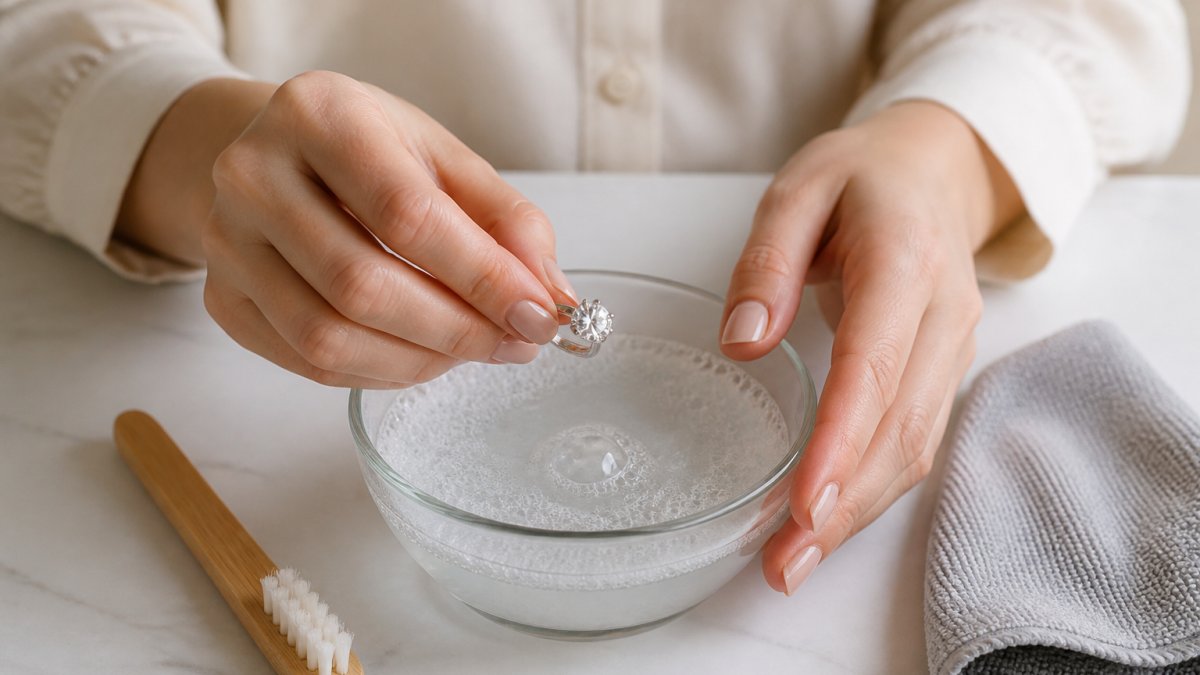
Soaking, Brushing, Rinsing, and Drying
- Fill a small bowl with warm water and add a few drops of mild dish soap. Swirl to mix.
- Soak the ring for 10 to 15 minutes. This softens oil and makeup residue so it lifts away easily.
- Brush gently around the stone and setting with a soft-bristled brush. Pay attention to the crevices underneath the stone where dirt collects.
- Rinse under warm running water, holding the ring over a closed drain or a bowl to prevent loss.
- Dry and polish with a soft cloth or microfiber cloth until the stone shines.
Don't scrub hard. Gentle cleaning is enough. If buildup remains after one pass, repeat the soak rather than pressing harder.
The Best Cleaner for Cubic Zirconia Jewelry (and What to Avoid)
The best cleaner for cubic zirconia jewelry is still the simplest one: a few drops of mild dish soap in warm water. It lifts skin oil, makeup film, and soap residue without attacking the stone or most metal settings. Store-bought jewelry cleaner can work as an alternative, but read the label before you buy. Formulas marketed for delicate or porous stones are the safer pick; anything labeled for heavy tarnish removal or "deep cleaning" is usually too aggressive for CZ and for plated or glued settings.
What Not to Use on CZ, and Why
Most damage to cubic zirconia jewelry at home comes from cleaners that are too strong, too abrasive, or too hot, not from the stone itself. CZ is hard, but the metal around it and the way the stone is held in place are the vulnerable parts. Here is the avoid list with the reason behind each item:
- Bleach and chlorine. These break down metal plating and can pit the alloy underneath, and repeated exposure weakens the bond in glued settings. Skip the jewelry while cleaning with bleach or spending time in a chlorinated pool.
- Ammonia-based glass and window cleaners. Ammonia can dull plated finishes and strip the protective layer on some settings. It is fine on bare gold in a jeweler's hands, not on a CZ piece at the bathroom sink.
- Abrasive cleaners like baking soda paste, whitening toothpaste, and scouring powder. These leave micro-scratches on the stone surface and on the metal, and scratches scatter light, which reads as cloudiness. Once the surface is scratched, no amount of soaking brings the sparkle back.
- Hot water. Heat softens the adhesive in glued settings and can cause a stone to lift out of its seat. Warm, not hot, is the rule.
- Ultrasonic and steam cleaners. These are useful in a jeweler's shop, but at home they can loosen stones in glued or worn prong settings and force cleaning solution into gaps that do not dry out. Use them only if the maker's guidance explicitly says the piece is safe for that device.
When in doubt, the Federal Trade Commission's guidance on jewelry care and marketing claims is a useful reminder that simple, gentle care protects both the piece and your purchase.
Matching the Cleaner to the Metal
The soap-and-water method is safe across most settings, but the metal around the stone changes what you should watch for:
- Plated metals and costume pieces. The plating is the fragile layer. Skip ammonia, bleach, and abrasive paste, keep soaks short, and dry thoroughly, because trapped moisture can cloud or lift plating over time.
- Sterling silver. Warm soapy water is fine, but silver tarnishes, and a silver polishing cloth used after drying helps. Do not use silver dip on a piece with glued CZ, since the dip can reach the adhesive.
- White gold. Rhodium plating gives white gold its bright color, and harsh cleaners wear that plating faster. Gentle soap and water, plus a soft cloth, is the safest routine between professional re-plating.
- Glued settings. Short soaks, warm rather than hot water, and no ultrasonic or steam. If a stone feels loose, stop and have it checked.
- Delicate and vintage pieces. Older settings may have worn prongs or thin metal. Clean with a soft brush and short soak, and check prongs before and after each cleaning.
How to Clean Cloudy Cubic Zirconia
Cloudy cubic zirconia usually isn't damaged. In most cases, a film of oil, soap residue, or hard water minerals is sitting on the surface and blocking the sparkle.
If cloudiness persists after two or three cleanings, the cause may be scratches from abrasive cleaners or a stone that needs professional attention. Avoid the urge to scrub harder. Repeated gentle cleaning is safer than one aggressive attempt.
How Often to Clean Cubic Zirconia Jewelry
How often to clean cubic zirconia jewelry depends on how often you wear it. For pieces worn daily, a quick warm-water dip and wipe two to three times a week keeps sparkle high.
For occasional pieces, clean them after each wear before storing. Oils and makeup residue set over time and become harder to remove. A little routine maintenance goes a long way toward long-term shine.
Cleaning Earrings, Bracelets, and Settings Safely
Rings get most of the attention, but earrings, bracelets, and the settings that hold the stones are where most home-cleaning accidents happen. The soap-and-water method still applies; what changes is the handling and the parts you check before and after.
Earrings
Earrings collect skin oil, hair product, and makeup on the posts and backs, and the small parts are easy to lose. Wipe the posts with a soft cloth dipped in warm soapy water, then rinse and dry. For glued settings, keep the soak short and the water warm, not hot. Work over a bowl rather than the sink so backs and small stones cannot drop down the drain.
Bracelets and Chains
Bracelets pick up lotion and perfume along the links and clasps, and those are the spots that fail first. Before cleaning, check clasps and links for looseness, then soak briefly and work a soft brush along the links. Rinse over a bowl, dry thoroughly, and let the piece air out before storing it. A clasp that feels loose after cleaning should be checked before the bracelet goes back into rotation.
Settings: Prong, Bezel, and Glued
The setting is the part most likely to be damaged by cleaning, and it is the part most people ignore.
- Prong settings. Dirt collects in the crevices under the stone. Brush gently around each prong, and check the prongs before and after cleaning by looking for gaps between the prong tip and the stone. A prong that has lifted is a stone waiting to fall out.
- Bezel settings. The metal collar around the stone protects it but traps residue at the edges. A soft brush along the seam, plus a short soak, is usually enough.
- Glued settings. These are the most heat- and moisture-sensitive. Keep soaks to a few minutes, use warm rather than hot water, and skip ultrasonic and steam cleaners entirely unless the maker confirms they are safe.
Safe Handling and Preventing Loss
The most common home-cleaning loss is not damage to the stone; it is the piece going down the drain or bouncing off a tile floor. Close the drain or, better, clean over a small bowl. Work on a clean towel so a dropped piece lands softly. Keep a dedicated soft-bristled brush for jewelry only, since a brush that has touched toothpaste or household cleaners can leave residue behind.
| Jewelry Type | Best Method | Watch Out For |
|---|---|---|
| Ring | Soak, brush, rinse, dry | Dirt under the stone, loose prongs |
| Earrings | Wipe posts, quick dip | Glued settings, lost backs |
| Bracelet | Gentle soak, soft cloth | Loose clasps and links |
| Delicate settings | Short soak, soft brush | Heat, long soaking, ultrasonic use |
When to See a Professional
Some problems need a jeweler, not a home fix.
The Gemological Institute of America's jewelry care resources also recommends professional inspection for well-worn pieces. If you're unsure whether a piece is safe to clean at home, ask before you try.
At AmberShop21, we design our pieces for comfortable everyday wear, and a simple care routine keeps them shining. Browse our jewelry care and styling guides for more tips on keeping your favorites bright.
Frequently Asked Questions
Can you clean cubic zirconia with dish soap?
Yes. Mild dish soap mixed with warm water is the safest everyday option for cubic zirconia. Add a few drops to a small bowl of warm water, soak the piece for 10 to 15 minutes, then brush gently with a soft-bristled brush. Avoid dish soaps with harsh degreasers or abrasives, and skip anything labeled heavy-duty. Rinse with plain warm water and dry with a microfiber cloth to keep the stone and setting clean without risking damage.
Can rubbing alcohol or jewelry cleaner damage cubic zirconia?
Rubbing alcohol can dull some settings and strip adhesive on glued stones, so it is not the best cleaner for cubic zirconia jewelry. Commercial jewelry cleaners vary widely; some are safe for CZ, but others contain ammonia or acids that can harm plated white gold or loosen settings. Check the label for CZ compatibility, and test any new cleaner on a hidden spot first. Warm water and mild dish soap remain the safest default.
How do you keep cubic zirconia from getting cloudy?
Cloudiness usually comes from oils, makeup residue, and soap film building up in the crevices around the stone. Clean your CZ jewelry every two to four weeks with warm water and mild dish soap, and wipe it with a soft cloth after each wear. Remove rings before applying lotion, perfume, or hairspray, and take them off before showering or swimming. Storing pieces in a dry pouch or lined box also limits dust and moisture exposure.
How often should you clean cubic zirconia jewelry?
For pieces worn daily, a quick wipe after each wear and a full soap-and-water cleaning every two to four weeks keeps the sparkle strong. Rings and earrings worn close to skin collect oils faster, so they may need cleaning every one to two weeks. Bracelets and necklaces worn occasionally can go four to six weeks between cleanings. If you notice dullness or visible film in the crevices, clean sooner rather than waiting for the next scheduled session.
Caring for cubic zirconia doesn't take special tools or a big time commitment. A small bowl, warm water, mild soap, and a soft cloth handle almost everything. When you want pieces that are easy to care for and made for daily sparkle, AmberShop21 curates jewelry and accessories designed to fit real life. Explore our collection to find your next everyday favorite and keep it shining for years.


