

How to Choose the Right Makeup Primer for Oily Skin
Last Updated: November 8, 2026
Quick Summary
To choose a makeup primer for oily skin, first confirm your skin is oily with a blotting test, since dehydrated skin can look shiny too. Then pick a silicone-based primer for shine control and a longer-wear finish, or a water-based one if you want something lighter and more breathable.
- Wash your face, wait about two hours, then press blotting paper on your forehead, nose and cheeks.
- Heavy oil on the T-zone with dry cheeks suggests combination skin rather than fully oily skin.
- Silicone-based primers suit people who want shine control and a longer-wear finish.
- Water-based primers feel lighter and suit oily skin that is also dehydrated or easily congested.
- Check the first five ingredients: dimethicone near the top signals a mattifying finish, while water first signals a lighter feel.
Table of Contents
- Confirm Your Skin Is Actually Oily Before You Shop
- Silicone vs. Water-Based Primer for Oily Skin
- Primer for Oily Acne-Prone Skin: Ingredients and Formulas to Avoid
- Primer for Oily Skin and Large Pores: What Actually Blurs Them
- How to Apply Primer for Oily Skin Step by Step
- Matching Primer With Your Foundation and Skincare Routine
- Booking Your Next Step: Try the PHOFAY Primer and Setting Spray Pairing
- Frequently Asked Questions
Confirm Your Skin Is Actually Oily Before You Shop
Many people pick a primer for oily skin before they have confirmed their skin is oily, which can lead them toward matte, heavy formulas they do not need. Oily skin shows shine within a few hours of washing, and the T-zone (forehead, nose and chin) usually gets shiny first.
Dehydrated skin can look shiny too, which is why the test below matters. Dehydration is a lack of water, while oily skin is a surplus of sebum. The two need different primers.
The blotting test and how to tell oily skin from dehydration
Try this simple check before you buy:
- Wash your face with a gentle cleanser and pat it dry.
- Wait about two hours without applying any products.
- Press a sheet of blotting paper firmly against your forehead, nose and cheeks.
- Hold it up to the light. Lots of oil on the paper points to oily skin.
If the paper shows heavy oil on your T-zone but your cheeks stay dry or tight, you likely have combination skin. If oil shows up everywhere and your skin feels greasy, you are probably oily. Tight skin that still looks shiny often points to dehydration, and a hydrating primer may suit you better.
Watch out:
Silicone vs. Water-Based Primer for Oily Skin
The main choice is between silicone-based and water-based primers, and the difference comes down to what each formula is built to do. Silicone-based primers generally rely on ingredients such as dimethicone, dimethicone crosspolymer, and cyclopentasiloxane. These ingredients form a smooth, flexible film that can fill in texture and give foundation something to grip.
Water-based primers list water as the first ingredient and usually rely on glycerin, hyaluronic acid, or lightweight polymers instead of silicones. They feel lighter and more breathable, and they can be a better fit if your skin is oily but also dehydrated or easily congested. The trade-off is that water-based primers generally offer less pore-blurring and less long-wear grip than silicone formulas.
For many people with oily skin, a silicone-based primer is a common choice for controlling shine and keeping foundation in place. Water-based options suit people who want a lighter feel, who find silicone heavy or slippery, or who are prone to clogged pores from occlusive films. Both types can work well, so it comes down to how your skin responds and what your foundation is built on.
A practical way to decide is to check the first five ingredients on the label. If dimethicone or a silicone crosspolymer appears near the top, expect a smoothing, mattifying, longer-wear finish. If water is first and glycerin follows, expect a lighter, more hydrating feel with less shine control. Many drugstore and prestige primers blend both approaches, so read the list rather than trusting the front label alone.
Watch out: Layering a water-based foundation over a heavy silicone primer, or the reverse, is a common cause of pilling and patchiness. Match the base of your primer to the base of your foundation, then test the pairing on your jawline before a full face.
A hydrating option is the PHOFAY Hydrating Makeup Primer. It is a lightweight primer with a silky texture that preps skin for foundation and aims for a fresh, even finish. It is priced at $30.52 for 25ml.

The two primer types differ mainly in their base ingredients, which shape how each one feels and performs:
| Primer type | Key ingredients | Main trade-off |
|---|---|---|
| Silicone-based | Dimethicone, dimethicone crosspolymer, cyclopentasiloxane | Smoother, longer-wear finish, but can feel heavier |
| Water-based | Water first, then glycerin, hyaluronic acid or lightweight polymers | Lighter and more breathable, but less pore-blurring and grip |
Primer for Oily Acne-Prone Skin: Ingredients and Formulas to Avoid
If you have oily skin that breaks out easily, read the ingredient list before you buy. Heavy, pore-clogging ingredients can make breakouts worse (Acne (spots)). Look for oil-free or non-comedogenic labels and avoid thick, greasy formulas.
Patch test any new primer on your jawline for a few days before you use it across your whole face. This helps you catch irritation early. Keep in mind that a product's listing may not cover your exact skin type, so check its full ingredient list yourself.
Primer for Oily Skin and Large Pores: What Actually Blurs Them
Pore-blurring primers use fine, light-reflecting ingredients to make texture look smoother. They do not shrink pores, but they can soften how visible they look in photos and in person. Silicone-based formulas often do this best on oily skin.
Use a small amount and focus it on the areas where pores show most, such as the nose and cheeks. Too much product can make the skin look cakey.
How to Apply Primer for Oily Skin Step by Step
Good application makes a bigger difference than the product itself. Follow these steps:
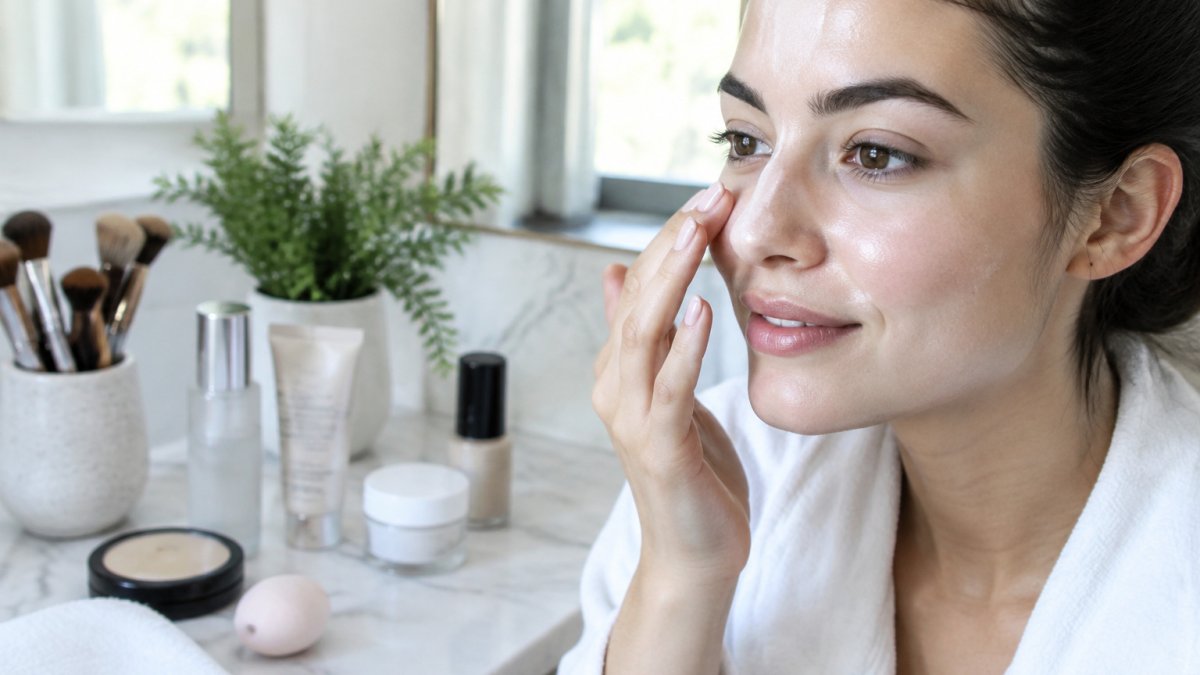
- Start with clean skin. Cleanse and pat dry.
- Apply moisturizer and sunscreen. Let them absorb fully, about one to two minutes.
- Use one to two pumps of primer. Warm it on the back of your hand first.
- Blend a thin layer on the T-zone first, then onto the cheeks and chin.
- Wait about one minute for the primer to set before applying foundation.
- Layer your makeup on top once the primer feels set.
For the photo on this section, see a close-up of a person blending a thin layer of primer onto the T-zone of their cheek in a bright bathroom.
Watch out: Applying primer over damp or unabsorbed skincare can cause pilling, where the product rolls up in patches.
Matching Primer With Your Foundation and Skincare Routine
Your primer should work with your foundation and your skincare, not fight either one. The most common cause of pilling, patchiness, and makeup separation is a base mismatch: a water-based product layered over a silicone-heavy one, or the reverse. The fix is to know what each layer is built on before you apply it.
Start with your foundation. Check whether water or a silicone such as dimethicone or cyclopentasiloxane is listed first. Water-based foundations pair most predictably with water-based or lightweight gel primers. Silicone-based and long-wear foundations pair best with silicone primers, because the two films bond instead of sliding against each other. If you are unsure, test the pairing on your jawline and let it set for ten minutes before committing to a full face.
Skincare matters just as much. Heavy night creams, facial oils, and thick occlusive balms can leave a film that makes primer slide off during the day. For oily skin, a lightweight, oil-free moisturizer applied and fully absorbed usually gives primer the best surface. Wait one to two minutes after moisturizer and sunscreen before priming, and pat away any excess rather than rubbing it in.
Ingredient conflicts are worth watching. Layering strong exfoliating acids or retinoids directly under primer can increase sensitivity and make the skin sting, so many people apply those at night instead. If your skin is oily but also dehydrated, a hydrating primer with glycerin or hyaluronic acid can sit more comfortably under makeup than a strong mattifying formula, which may emphasize flaking.
A repeatable wear test tells you more than any label. Apply your primer and foundation on a normal day, then check your T-zone at the four-hour and eight-hour marks. Note shine, whether makeup has settled into pores or fine lines, and whether any patchiness appeared. If shine returns early, a mattifying silicone primer or a setting powder may help. If makeup separates or pills, the primer and foundation bases likely do not match. Run the test once with each primer you are considering so you compare like with like.
If you want a complete base, the Waterproof Lasting Non Take Off Makeup Concealer Liquid Foundation Beauty Makeup is a long-lasting, waterproof liquid foundation that pairs well with a primer. It is designed to hold up through a full day of wear.

Watch out: Applying primer over damp or unabsorbed skincare can cause pilling, where the product rolls up in patches. Let every layer set before adding the next one.
Booking Your Next Step: Try the PHOFAY Primer and Setting Spray Pairing
Once you have confirmed your skin type and chosen a primer style, the next step is to test your routine. Start with the PHOFAY Hydrating Makeup Primer for a lightweight base, then add the Makeup Mist Spray lasting Matte Makeup Effect Waterproof to set your makeup. The mist is priced at $21.67 for 60ml.

Test the pairing on a normal day before a big event. That way you learn how your skin responds without pressure.
Frequently Asked Questions
Is silicone or water-based primer better for oily skin?
Silicone-based primers usually suit oily skin better because they create a smooth, grippy layer that controls shine and helps foundation stay put through the day. Water-based primers feel lighter and are a good choice if your skin tends to feel tight or dehydrated between oily patches. A hydrating water-based formula, such as the PHOFAY Hydrating Makeup Primer, can be applied in a thin layer and allowed to set for about a minute before foundation. Test one on your T-zone for a few days to see how your skin responds.
Should you use primer if you have oily skin?
Yes, a primer is often worth using on oily skin because it gives foundation a more even surface. The key is choosing a mattifying or oil-controlling formula rather than a heavy, moisturizing one that adds more slip. If your skin is very oily, you may still need touch-ups with blotting paper or a setting spray such as the Makeup Mist Spray lasting Matte Makeup Effect Waterproof to keep the finish fresh.
What ingredients should I look for in a primer for oily acne-prone skin?
Look for oil-free, non-comedogenic formulas and avoid heavy occlusive oils that can clog pores. Lightweight silicone and water-based bases generally sit better on acne-prone skin than thick creams. Always patch test a new primer on your jawline for a few days before using it across your whole face, especially if your skin is sensitive or reacts easily to new products.
How do I choose a primer for oily skin with large pores?
Some primers use silicone-based or light, smoothing ingredients that can make texture around pores look more even. Apply a small amount focused on the nose and cheeks, where pores are most visible, and avoid piling it on. Pair the primer with a matte foundation for the best results, and let each layer set briefly before adding the next.


