

How to Assess Clothing Quality Online: A Step-by-Step Guide
Table of Contents
- Why Assessing Clothing Quality Online Matters
- Step 1: Examine Fabric Composition and Fiber Content
- Step 2: Inspect Stitching Quality and Seam Integrity
- Step 3: Check Hardware, Buttons, and Fasteners
- How to Spot Low Quality Clothes Online
- Best Fabrics for a Capsule Wardrobe That Lasts
- Evaluate Garment Construction and Internal Finishing
- Use Care Labels to Predict Garment Longevity
- Frequently Asked Questions
Last Updated: September 25, 2026
Why Assessing Clothing Quality Online Matters
Shopping for clothes online means you can't touch fabric or try things on before buying. Learning to assess clothing quality online helps you make smarter purchases and avoid wasting money on pieces that fall apart after a few wears.
The difference between a garment that lasts years and one that falls apart in months comes down to fiber content, seam construction, hardware quality, and finishing details.
This guide teaches you how to assess clothing quality online by examining product photos, identifying important labels, and spotting red flags before checkout.
Step 1: Examine Fabric Composition and Fiber Content
Fiber content determines how a piece will feel, perform, and last, predicting everything from washing frequency to pilling and fading.
Reading the Fiber Content Label
Every piece of clothing sold in the United States must display fiber content in product descriptions. Fibers are listed by weight, so the first fiber listed makes up the largest percentage.
Quality pieces often have clear fiber information with exact percentages like "100% cotton" or "65% polyester, 35% cotton." Vague descriptions can be a red flag.
Terms like "premium cotton" or "high-quality polyester" mean nothing without percentages. A 100% cotton t-shirt behaves completely differently than a 50% cotton blend.
Natural vs. Synthetic Blends
Natural fibers like cotton, linen, and wool offer breathability and comfort, aging gracefully, cotton softens with washing, linen develops character.
Synthetic fibers like polyester, nylon, and acrylic offer durability and easy care, resisting wrinkles and holding color, but may feel less comfortable in heat and pill more easily.
Blends combine benefits of both, a 65% cotton, 35% polyester blend offers comfort plus durability. The key is understanding what the blend does for you.
Federal Trade Commission guidelines on fiber content labeling require accurate fiber disclosure. When you see clear, specific percentages, you know the retailer is following these standards.
Step 2: Inspect Stitching Quality and Seam Integrity
Stitching quality separates garments that last from those that don't. Well-constructed seams hold through hundreds of washes; poor stitching fails quickly.
What to Look for in Product Photos
Zoom in on product photos to examine seams. Look for these signs of quality stitching:
- Straight, even stitches with consistent spacing
- Reinforced seams at stress points like armholes and crotch areas
- Serged or finished edges that prevent fraying
- Double stitching on seams that bear weight
- Tight, secure knots at seam starts and ends
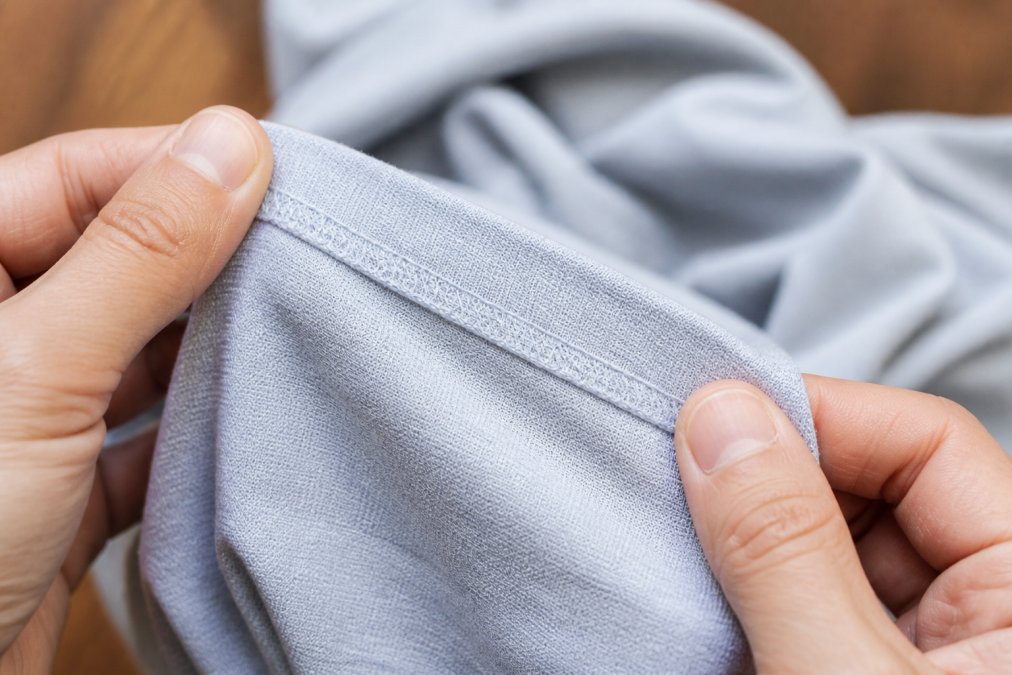
Poor stitching looks loose, uneven, or wobbly in photos. Threads about to come undone or seams that pucker indicate rushed manufacturing and improper tension.
Quality garments often have serged or bound seams that prevent unraveling in the wash. Budget garments may have raw, unfinished seams that fall apart more quickly.
More stitches per inch generally means stronger seams. Sparse, loose seams may fail faster than tight, numerous stitches.
Step 3: Check Hardware, Buttons, and Fasteners
Hardware, buttons, zippers, snaps, and hooks, should not break, tarnish, or fail under normal wear.
Quality buttons often sit firmly with reinforced stitching underneath and look substantial. Cheap buttons may feel flimsy and break easily.
Branded zippers like YKK are often considered an industry standard for quality.
How to Spot Low Quality Clothes Online
Recognizing poor quality before you buy saves money and frustration. Certain patterns appear consistently in low-quality garments.
Red Flags in Product Descriptions and Photos
Vague descriptions like "made from quality materials" without specific fibers are warning signs. Legitimate retailers provide exact fiber content and percentages.
Signs of Poor Manufacturing and Fast Fashion
Loose threads visible in product photos signal rushed assembly and pieces shipped without proper quality checks.
Best Fabrics for a Capsule Wardrobe That Lasts
Building a capsule wardrobe means choosing pieces you'll wear repeatedly. Fabric selection determines whether they last one season or five years. 'Sustainable' and 'durable' are not synonymous, understanding the difference helps you make long-term investments.
Durability vs. Sustainability: Why the Distinction Matters
Sustainable fabrics have lower environmental impact: organic cotton uses fewer pesticides, Tencel uses sustainably harvested wood pulp, and recycled polyester diverts waste from landfills.
High-Durability Natural Fibers
Cotton is the foundation of durable everyday wear. However, not all cotton is equal. Look for these specifications in product descriptions:
-
Weight: Measured in grams per square meter (gsm). Quality t-shirt cotton is typically 150-200 gsm. Lightweight cotton under 120 gsm pills easily and wears thin. Heavier cotton (200+ gsm) resists pilling and maintains structure through many washes.
-
Ply: Single-ply cotton is thinner; two-ply or three-ply cotton is thicker and more durable. Product descriptions sometimes specify "two-ply cotton" or "heavyweight cotton," which indicates durability.
-
Weave: Tight weaves (like twill or sateen) are more durable than loose weaves (like jersey). If a product description mentions weave type, that's a positive sign of transparency.
-
Staple length: Longer staple cotton (like Pima or Egyptian cotton) has longer fibers that create stronger yarn. These are more durable and softer than short-staple cotton. Product descriptions sometimes specify staple length.
-
Weight: Quality linen garments are typically 150+ gsm. Lightweight linen under 100 gsm wrinkles excessively and wears thin.
-
Blend composition: 100% linen is most durable. Linen-cotton blends (typically 55% linen, 45% cotton) offer durability with less wrinkling.
-
Finish: Some linens are pre-washed or enzyme-treated to reduce wrinkling. Product descriptions mentioning these treatments indicate intentional durability design.
-
Fiber micron count: Measured in microns (diameter of wool fibers). Lower micron count means finer, softer wool. Merino wool is typically 15-25 microns and works for everyday wear. Standard wool is 25-35 microns and is more durable but less soft. Coarse wool over 35 microns is scratchy but extremely durable.
-
Ply: Two-ply or three-ply wool is more durable than single-ply.
-
Blend: 100% wool is most durable. Wool blends with synthetics (like 80% wool, 20% nylon) add durability and reduce pilling.
Durable Synthetic and Blended Fabrics
Polyester blends work well for active wear and pieces needing easy care. A 65% polyester, 35% cotton blend balances comfort with durability and wrinkle resistance. Look for:
- Blend ratio: Higher cotton percentage (40%+) improves breathability; higher polyester percentage (60%+) improves durability and wrinkle resistance.
- Fiber denier: For synthetic fabrics, denier indicates fiber thickness. Higher denier (typically 75+ denier) is more durable than lower denier.
Sustainable Alternatives with Good Durability
Tencel (Lyocell) is made from sustainably harvested wood pulp using a closed-loop process. It drapes beautifully and feels luxurious. Durability depends on weight and construction:
- Look for Tencel garments with good weight (not flimsy) and tight seams.
- Tencel blends with cotton or polyester (like 60% Tencel, 40% cotton) are more durable than 100% Tencel.
- Tencel may require slightly more careful washing than cotton but can last well with proper care.
Fabrics to Avoid for Capsule Wardrobe Longevity
Cheap acrylic may pill excessively and can look shabby after a few wears. Consider avoiding garments with high acrylic content (over 50%) if pilling is a concern.
How to Identify Fabric Quality Online
When shopping online, product descriptions should include:
- Specific fiber content with percentages (not vague terms like "quality cotton")
- Weight or gsm if available
- Weave type or construction method
- Staple length or fiber grade for natural fibers
- Care instructions that indicate durability (machine washable is more durable than hand wash only)
Retailers providing detailed specifications often invest in transparency and quality. Those with vague descriptions like "soft fabric" may be less transparent. Consider requesting detailed specifications before purchasing.
Evaluate Garment Construction and Internal Finishing
What you can't see often matters as much as what you can. Internal finishing and construction details reveal quality level.
Use Care Labels to Predict Garment Longevity
Care labels hint at garment quality. Complex care instructions can suggest delicate, high-quality materials; simple instructions may indicate hardy, durable fabrics.
Frequently Asked Questions
What are the red flags of low-quality clothing online?
Watch for blurry or inconsistent product photos, vague fiber content labels that say only 'polyester blend' without percentages, visibly loose or uneven stitching in close-up shots, missing or illegible care labels, and descriptions using phrases like 'similar to' or 'inspired by' rather than specific material names. Poor image quality often signals the seller hasn't invested in proper product photography, which correlates with cutting corners elsewhere in construction and materials.
How do I read a garment care label to determine quality?
Quality garments often include detailed care instructions with specific temperatures and methods. Look for labels that specify fiber content percentages (not just 'blend'), shrinkage information, and warnings about colorfastness. Labels mentioning 'hand wash' or 'dry clean' often indicate natural fibers or delicate construction. Vague labels with minimal information can suggest items designed for short-term wear rather than garment longevity.
What's the difference between sustainable and durable clothing?
Durable clothing is generally built to last years with proper care, often using quality stitching, reinforced seams, and substantial fabric weight. Sustainable clothing prioritizes eco-friendly materials and ethical production. A piece can be both: natural fibers with excellent construction can offer durability and lower environmental impact over time. Cost per wear may improve dramatically with durable items, spending more upfront on quality pieces can often cost less per use than replacing fast fashion frequently.
Why does fabric composition matter for clothing longevity?
Natural fibers like cotton, linen, and wool may typically outlast many synthetics because they often resist pilling, maintain their shape, and can improve with age. Synthetic blends can offer benefits like wrinkle resistance, but pure synthetics may often pill, lose elasticity, and deteriorate faster. Checking the fiber content label helps you predict how a garment will perform after multiple washes and wears, directly affecting how long clothing will remain wearable.
Learning to assess clothing quality online puts you in control of your wardrobe spending. When you know what to examine in photos and descriptions, you spot quality pieces and avoid mistakes. AmberShop21's carefully curated collection focuses on pieces with strong construction, quality materials, and lasting appeal. Check fabric content, examine seams closely, and read care labels before buying. These simple steps help you build a wardrobe of pieces you'll actually wear for years.


