

7 Reasons to Skip the Shower in Gold-Plated Jewelry
Last Updated: November 12, 2026
Quick Summary
No, you should not wear gold-plated jewelry in the shower. Water, soap, and friction slowly break down the thin gold layer, and repeated exposure speeds up fading, discoloration, and plating loss. A quick rinse now and then is fine, but a daily shower habit will shorten the life of any plated piece.
- Soap and shampoo are the bigger threat to plating than plain water alone.
- Remove pieces before showers, workouts, and swimming to keep plating intact.
- Blot wet pieces with a soft cloth, then air dry fully before storing.
- Never soak plated jewelry in water or use toothbrushes, baking soda, or silver polish.
- Keep plated jewelry out of pools and hot tubs, since chlorine acts faster than soap.
Table of Contents
- Can You Wear Gold-Plated Jewelry in the Shower?
- What Water, Soap, and Shampoo Do to the Gold Layer
- How Long Does Gold-Plated Jewelry Last?
- Can You Wear Gold-Plated Jewelry Every Day?
- Can You Wear Gold-Plated Jewelry in a Pool?
- How to Clean Gold-Plated Jewelry After It Gets Wet
- Which Jewelry Materials Can Handle a Shower
- Shop Gold-Plated Pieces Built for Everyday Wear
- Frequently Asked Questions
Can You Wear Gold-Plated Jewelry in the Shower?
No, you should not wear gold-plated jewelry in the shower. The short answer is that water, soap, and friction slowly break down the thin gold layer, and repeated exposure speeds up fading, discoloration, and plating loss. A quick rinse now and then is fine, but a daily shower habit will shorten the life of any plated piece.
Gold-plated jewelry is a base metal core covered with a very thin layer of gold. That layer is measured in microns, and it is far thinner than most people picture. Water alone is not the main enemy. The real damage comes from what water carries: soap, shampoo, conditioner, and body wash.
Here is what most guides get wrong. They say "water ruins plating" and stop there. In practice, the chemistry of your shower matters as much as the water itself.
Below, we break down exactly what happens, how long plated pieces really last, and how to protect the jewelry you love.
What Water, Soap, and Shampoo Do to the Gold Layer
Soap and shampoo are the bigger threat, not plain water. Most shower products contain surfactants, fragrances, and oils. These strip the thin gold layer and leave a dull film behind.
Three things wear down plating during a shower:
- Chemicals: Soap, shampoo, and body wash break down the gold layer over time.
- Friction: Loofahs, towels, and hair brushing rub against the piece and scrape the surface.
- Heat and moisture: Warm water softens the base metal and traps moisture against the skin.
A common mistake is thinking a "gentle" body wash is safe. It still contains surfactants. Each wash leaves a little residue in the tiny gaps of the plating, and that residue dulls the shine.
The occasional splash will not destroy a piece. Daily exposure is what adds up.
How Long Does Gold-Plated Jewelry Last?
How long gold-plated jewelry lasts depends on plating thickness, base metal quality, and how often it meets water and friction.
Pieces with thicker plating and a solid base hold up longer. Thin, budget-friendly plating fades faster, especially with daily shower exposure. The difference between a piece that lasts a year and one that fades in months usually comes down to care, not luck.
If you want a layered look you can rotate and rest, a multi-piece set gives you options without over-wearing any single chain. You can browse our Gold-Tone 10-Piece Necklace Set to build a layered style.
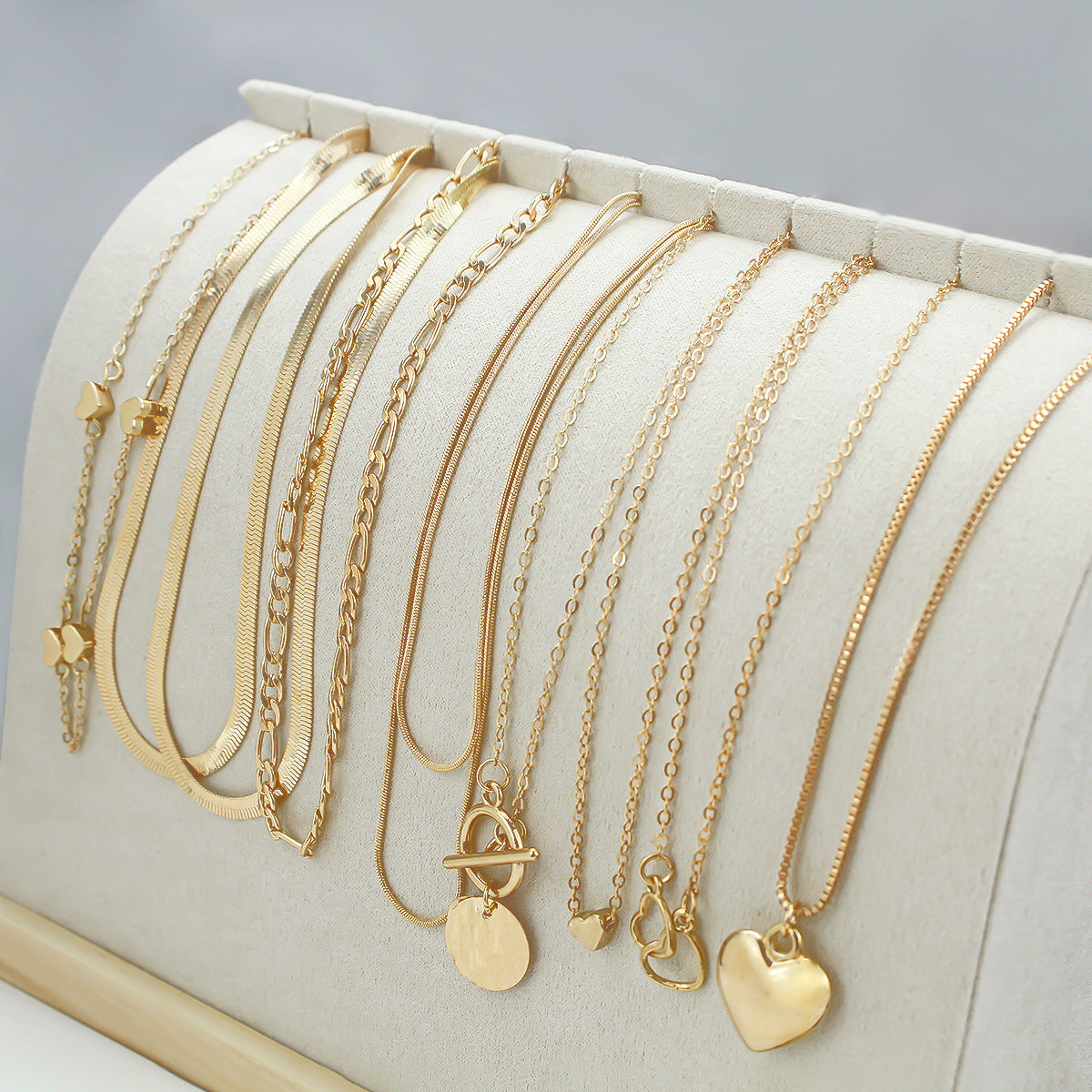
Watch out: storing plated jewelry in a steamy bathroom is one of the fastest ways to speed up tarnish. Keep it in a dry room instead.
Can You Wear Gold-Plated Jewelry Every Day?
Yes, you can wear gold-plated jewelry every day, but not in every situation. Daily wear is fine for work, errands, and nights out. The key is to remove pieces before showers, workouts, and swimming.
A simple daily routine keeps plating intact:
- Put jewelry on after your shower and skincare, not before.
- Take it off before bed to avoid friction against sheets.
- Wipe pieces with a soft cloth at the end of the day.
- Store each piece separately so chains do not scratch each other.
If you want a low-maintenance everyday piece, a simple design is easier to care for than a delicate one. Our Heart Charm Bracelet is a bracelet you can wear on its own or with your favorite jewelry.
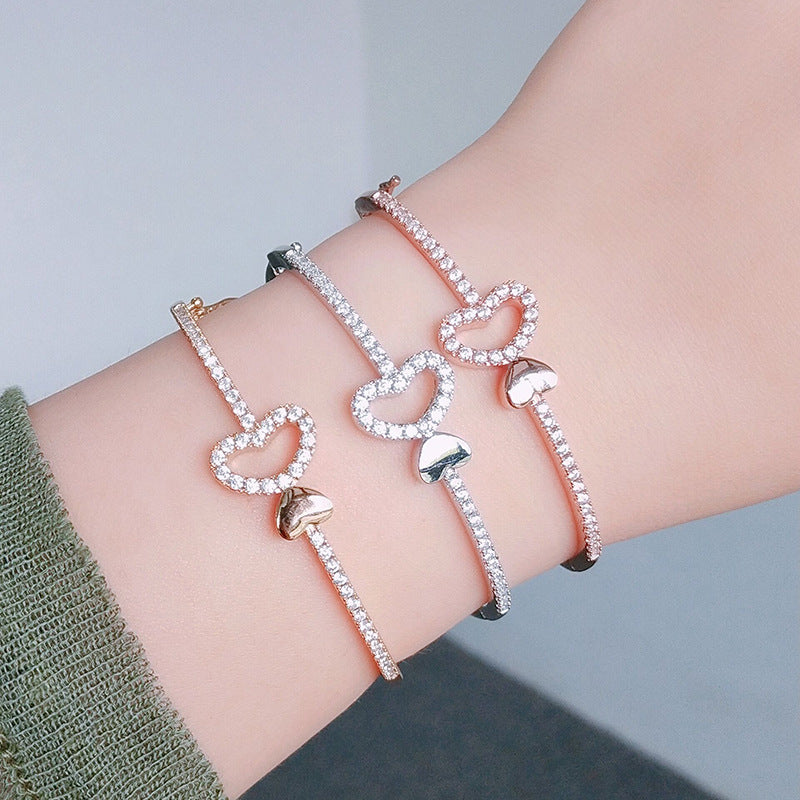
The takeaway: daily wear is fine. Daily showering in it is not.
Can You Wear Gold-Plated Jewelry in a Pool?
No, keep gold-plated jewelry out of pools. Chlorine and salt water are harsher than shower water. Chlorine can discolor the gold layer and pit the base metal, and salt water speeds up tarnish.
The same goes for hot tubs, which combine heat, chlorine, and moisture. If you forget and jump in, rinse the piece with plain water and dry it right away.
Pool chemicals act faster than soap. A single swim will not always ruin a piece, but repeated exposure will. Treat pools and hot tubs as a hard no.
How to Clean Gold-Plated Jewelry After It Gets Wet
Clean and dry the piece immediately after it gets wet. Do not let water sit on the surface, and do not rub hard. Gentle steps protect the plating.
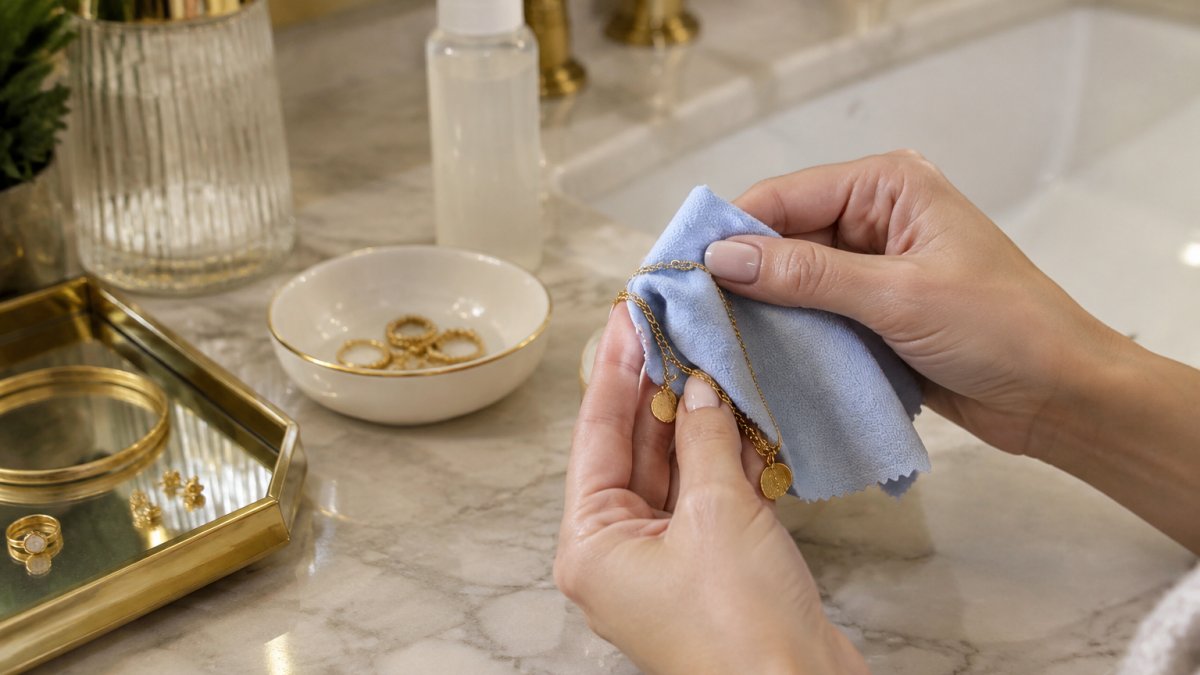
Follow this sequence after accidental exposure:
- Blot, do not rub. Pat the piece dry with a soft cloth to lift surface water.
- Air dry fully. Let it sit in a dry spot for an hour before storing.
- Wipe with a microfiber cloth. Remove residue and restore shine.
- Skip harsh cleaners. No bleach, no abrasive pads, no jewelry dip.
- Store dry and separate. Keep pieces apart in a pouch or box.
A common mistake is using tissue or paper towels. They leave lint and can scratch the gold layer. A soft cloth is the only tool you need.
For deeper cleaning, use a barely damp cloth with a drop of mild soap, then dry completely. Never soak plated jewelry in water. Watch out: do not use a toothbrush, baking soda paste, or silver polish on gold-plated pieces. Those abrasives cut through the thin gold layer faster than the shower did.
When the plating has already worn through. Look for a dull, patchy finish, a color shift toward the base metal at high-friction spots like the clasp or the back of a pendant, or skin discoloration where the piece touches you. Those are signs the gold layer has worn away in that area. At that point, stop polishing and treat the piece as base metal until it is repaired.
Repair and replating options. A local jeweler can quote replating if you want to restore a piece. Before you hand the piece over, remove it from water and store it dry, and tell the jeweler what the base metal is if you know it. Do not attempt home electroplating kits on a piece you care about; uneven current and poor surface prep are common causes of a blotchy result.
Evidence-based wear expectations. There is no guaranteed lifespan for gold-plated jewelry. Plating thickness, base metal, friction, and product exposure all affect how long a piece keeps its finish, so judge your own piece by how it looks and feels.
Which Jewelry Materials Can Handle a Shower
Stainless steel and solid gold handle showers best. Sterling silver and gold-filled jewelry tolerate occasional water but still need care. Gold-plated and gold vermeil pieces should come off before you step in. The table below is a starting point, but the construction behind each label matters more than the label itself.
| Material | Shower-Safe? | Why |
|---|---|---|
| Solid gold | Yes | Gold all the way through, no layer to wear off |
| Stainless steel | Yes | Rust-resistant and durable in water |
| Sterling silver | Occasional | Water is fine, but moisture speeds tarnish |
| Gold-filled | Occasional | Thick gold bond, but soap dulls the finish |
| Gold vermeil | Remove | Thick plating over silver, still wears with soap |
| Gold-plated | Remove | Thin gold layer fades fast with water and friction |
The difference between gold-plated, gold-filled, and solid gold comes down to construction. Solid gold is gold throughout. Gold-filled has a thick layer of gold bonded to a base metal, usually brass or copper, and the bond is mechanical rather than a thin electroplate. Gold-plated has only a thin gold layer over a base metal core, which is why it needs the most care. Gold vermeil sits in between: it is a thicker gold layer over sterling silver, and while it outlasts standard plating, it still wears with repeated soap and friction.
Plating thickness is the variable most guides skip. Two pieces can both say "gold-plated" and behave very differently. A piece with a thicker plating layer and a solid base metal will hold up longer than a thin, budget-friendly plate over a reactive core. That is why one shopper's chain lasts a year and another's fades in months on the same routine. A common pattern is that thicker plating and a brass or copper base resist wear better than thin plating over a zinc alloy, but no plated piece is built for daily showers.
Base-metal exposure matters for sensitive skin. Once the gold layer wears through, the underlying metal touches your skin directly. Nickel, a common base-metal component, is a frequent cause of contact dermatitis, and the American Academy of Dermatology notes that nickel allergy is common and can cause redness, itching, and rash (the American Academy of Dermatology). If a piece starts to irritate your skin after the plating fades, stop wearing it rather than trying to polish through the reaction. Watch out: a piece that turns your skin green is usually reacting base metal, not a sign that the gold is still intact.
If you want a durable everyday alternative, a stainless or well-made plated bracelet can take more wear. Our Colorful High Street Style Cuban Bracelet is a practical pick for everyday styling when you want a sturdier look.
Shop Gold-Plated Pieces Built for Everyday Wear
The best way to keep plated jewelry looking new is to wear it smart. Take it off before showers, pools, and workouts, dry it fast when it gets wet, and store it away from steam. Do those three things to help your pieces keep their shine.
At AmberShop21, we curate jewelry meant to be worn and enjoyed every day, not locked away for special occasions. If you are ready to build a look you can rotate, start with a set that gives you options.
A good first pick is our Fashion 18K Gold Plated Jewelry Set, which includes a necklace, earrings, ring, and bracelet. Wear it for the day, then take it off before your shower. That small habit is what keeps plated jewelry looking bright.
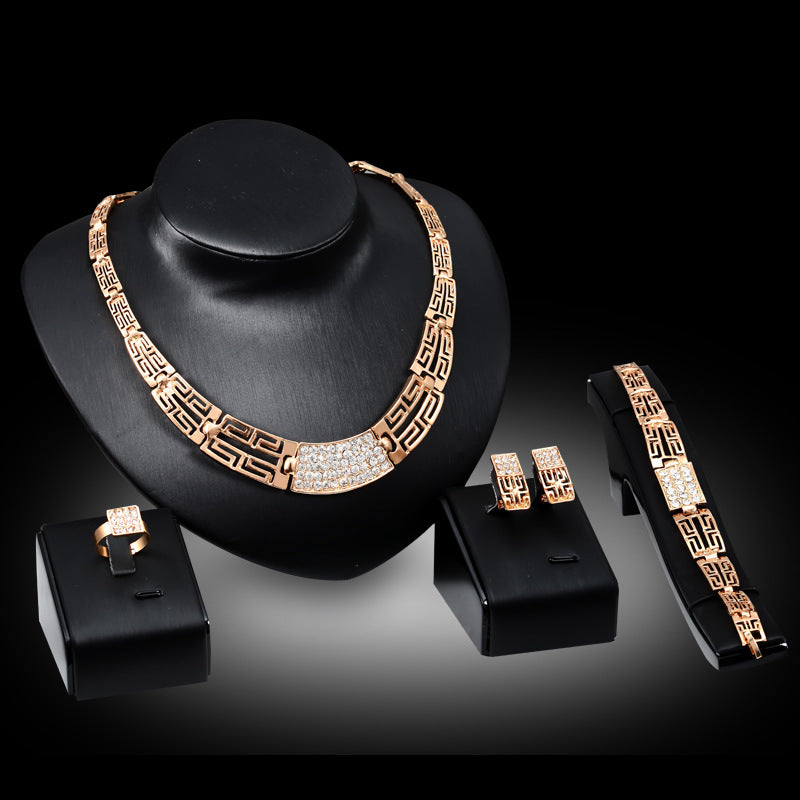
The real challenge is not buying plated jewelry. It is building the small habits that keep it looking new. AmberShop21 makes that easy with a curated collection of fashion, jewelry, and makeup designed for everyday self-expression, plus pieces you can mix, match, and rotate. Explore the collection and find your next everyday favorite.
Frequently Asked Questions
Is it okay to shower with gold-plated jewelry?
Occasionally, yes, but not as a habit. One quick shower won't destroy a gold-plated piece, but repeated exposure to water, soap, and friction wears down the thin gold layer faster. If your piece has an alloy base, moisture can also reach the metal underneath and cause discoloration. Take it off before showering when you can, and dry it right away if it gets wet.
What happens if gold-plated jewelry gets wet?
Water alone does little in a single exposure, but soap, shampoo, and body wash leave a residue that dulls the finish. Heat and moisture also loosen the bond between the plating and the base metal over time. If a piece gets wet, pat it dry with a soft cloth rather than letting it air dry, and avoid rubbing, which adds friction that speeds up plating loss.
Can you wear gold-plated jewelry in a pool?
Keep gold-plated jewelry out of pools. Chlorine and salt water are harsher than shower water and can strip the plating faster, and the chemicals can discolor the base metal underneath. The same goes for hot tubs. If you want a piece you can swim in, look for solid gold, gold-filled, or stainless steel instead.
How should you dry gold-plated jewelry if it gets wet?
Pat it dry with a soft, lint-free cloth, then let it sit in open air for a few minutes before storing it. Don't use a hair dryer or a radiator, since heat can weaken the plating bond. Once it's fully dry, store it in a pouch or a lined box away from moisture so the finish stays intact between wears.


