

The Everyday Fashion Jewelry Style Guide for Daily Wear
Last Updated: November 5, 2026
Quick Summary
An everyday fashion jewelry style guide starts with a small core of versatile staples: a chain necklace, small hoop or stud earrings, a ring you never remove, and a bracelet that stacks easily. Build these basics first, then layer in personality with one focal point per outfit. Space necklace layers about two inches apart and stop at three chains.
- Start with basic staples before buying statement jewelry, which often sits unworn.
- Classic pieces share clean lines and neutral finishes, so they outlast fast-fashion drops.
- Keep metals consistent within one look unless you are deliberately mixing.
- Space necklace layers roughly two inches apart and stop at three chains.
- Put jewelry on last, after lotion, perfume, and hair products have dried.
Table of Contents
- Everyday Jewelry Essentials and Wardrobe Staples
- Must-Have Classic Jewelry Pieces Worth Owning
- How to Wear Jewelry to Look Classy Every Day
- How to Layer Necklaces Without the Clutter
- Everyday Jewelry That Won't Tarnish: Materials and Care
- Matching Jewelry to Outfits, Personal Style, and Occasions
- Building Your Everyday Jewelry Collection at AmberShop21
- Frequently Asked Questions
Everyday Jewelry Essentials and Wardrobe Staples
Building an everyday fashion jewelry style guide starts with a simple truth: the pieces you reach for daily should work as hard as your favorite jeans. Shoppers tend to gravitate toward a small core of versatile staples rather than a drawer full of one-off pieces. An everyday jewelry wardrobe is the set of pieces you can wear repeatedly without thinking, including a chain necklace, small hoop or stud earrings, a ring you never remove, and a bracelet that stacks easily. Get these right and outfit coordination becomes almost automatic.
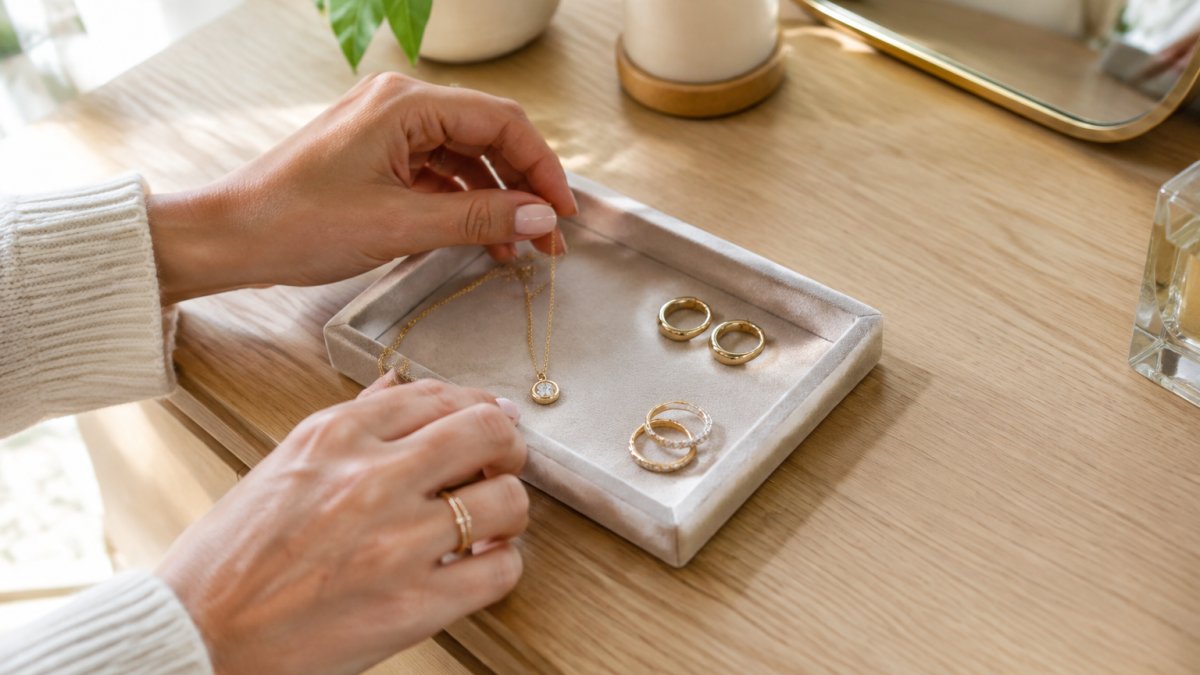
A common mistake is buying statement jewelry first. Statement pieces are fun, but they sit unworn while you scramble for something simple. Start with the basics, then layer in personality. The FTC's consumer guidance on jewelry buying is a useful reminder to check material claims before you commit, since "gold-tone" and "gold" are not the same thing.
Must-Have Classic Jewelry Pieces Worth Owning
If you want a jewelry wardrobe that never feels dated, focus on shapes rather than trends. Classic pieces share clean lines and neutral finishes, which is why they outlast fast-fashion drops. Our shortlist of must-have classic jewelry pieces:
- A fine chain necklace with a small pendant
- Small hoop earrings and simple studs
- A plain band or stacking ring
- A slim bracelet or bangle
- One pearl or geometric accent piece for interest
The Fashion Jewelry Geometric Pearl Retro Jewelry Women bracelet is a good example of a classic-with-a-twist piece: its geometric shape and imitation pearl detail give it a modern-yet-simple look.

How to Wear Jewelry to Look Classy Every Day
Looking classy is less about price and more about restraint and proportion. The fastest route to a polished everyday look is to pick one focal point per outfit and let the rest stay quiet. If you wear a bold earring, keep the necklace minimal. If a pendant is the star, skip the chunky bracelet.
A few rules we return to constantly:
- Match jewelry scale to your neckline and frame.
- Keep metals consistent within a single look unless you are deliberately mixing.
- Choose one statement piece and treat everything else as supporting cast.
- Let your outfit's palette guide the finish, warm tones with gold, cool tones with silver.
That discipline is what separates "put together" from "overdone."
How to Layer Necklaces Without the Clutter
Layering works when each chain has room to breathe, and the difference between a polished stack and a tangled knot usually comes down to inches, not taste. The most reliable approach is to treat your neckline as a set of fixed stations and place one chain at each station rather than eyeballing it in the mirror.
Common necklace lengths, measured from the clasp around the back of the neck to the front drop, give you those stations:
- Choker: 14 to 16 inches, sits at the base of the throat.
- Collar: 16 to 18 inches, rests on the collarbone.
- Princess: 18 to 20 inches, falls just below the collarbone and is the most versatile base layer.
- Matinee: 20 to 24 inches, lands on the sternum and works well as a mid-layer pendant.
- Opera: 28 to 36 inches, drops to the bust and can be doubled for a shorter look.
A staircase effect needs roughly two inches of separation between layers. If two chains sit within an inch of each other, they will cross, catch, and read as one cluttered mass. Start with a collar-length base such as a Fashion Jewelry Collar Neck Short Necklace, add a princess-length pendant, then finish with a matinee chain if you want a third layer.

Weight and clasp placement matter as much as length. A heavier chain at the bottom anchors the stack and keeps lighter chains from riding up. Check that each pendant hangs centered by adjusting the clasp slightly off-center to the back, since most pendants drift toward the side the clasp sits on. If you are mixing a delicate chain with a heavier one, put the heavier piece on the longer layer so gravity works with you instead of against you.
A simple repeatable method for building a layered look:
- Pick the neckline of your top first. A V-neck or scoop already creates a visual line, so keep layers inside that line; a high crew neck leaves more room for a longer drop.
- Choose one focal pendant and make every other chain quieter in weight and detail.
- Space layers at two-inch intervals and stop at three chains.
- Match the metal family across the stack unless you are deliberately mixing, in which case repeat each metal at least twice so the mix looks intentional.
Watch out: layering more than three chains of similar weight and length is the single most common reason a stack looks messy rather than styled, and thin chains under 1 mm are prone to kinking when layered with heavier pieces.
If you are new to layering, build up slowly. Two well-spaced necklaces beat four crowded ones every time, and the two-inch rule will keep even a beginner's stack looking deliberate.
These necklace lengths give you fixed stations for building a layered look.
925 Sterling Silver Fashion Ring for Women →
| Length | Inches | Where it sits |
|---|---|---|
| Choker | 14 to 16 | Base of the throat |
| Collar | 16 to 18 | On the collarbone |
| Princess | 18 to 20 | Just below the collarbone |
| Matinee | 20 to 24 | On the sternum |
| Opera | 28 to 36 | Drops to the bust |
Everyday Jewelry That Won't Tarnish: Materials and Care
No jewelry is truly tarnish-proof, but material choice, plating quality, and care habits decide how long a piece keeps its shine and whether you can wear it comfortably all day. This is the part most styling guides skip, and it is the part that determines whether your everyday pieces actually stay in rotation.
Common materials and what to expect:
- Sterling silver (92.5 percent silver) is durable and well-understood, but it tarnishes when exposed to sulfur compounds in air and humidity. It can be polished back, which is why it holds up as a long-term everyday metal.
- Titanium steel and stainless steel resist tarnish and corrosion well and are a practical choice for people who react to other metals, though the finish is cooler and less warm-toned than gold.
- Gold-filled and vermeil pieces carry a thicker layer of gold over a base metal and outlast standard electroplating, which is typically only a few microns thick and wears through at high-friction points like ring bands and clasp edges.
- Base-metal costume pieces with thin plating look bright at first but dull or flake where they rub against skin, especially on rings and bracelets worn daily.
Skin sensitivity is the other half of the equation. Nickel is the most common metal allergen, and it is frequently present in inexpensive alloys and in the base metal under plating. If a piece leaves a red, itchy mark, the plating has likely worn at a contact point. Look for nickel-free or hypoallergenic labeling, and treat any claim you cannot verify with caution; the FTC's consumer guidance on jewelry buying is a useful reminder that "gold-tone" and "gold" are not the same thing and that material claims should be checkable.
Care habits that make the biggest difference:
- Put jewelry on last, after lotion, perfume, and hair products have dried.
- Remove pieces before showering, swimming, or cleaning, since chlorine and harsh cleaners attack plating and accelerate tarnish.
- Wipe with a soft cloth after wear to remove skin oils and sweat, then store dry.
- Keep pieces separated in pouches or compartments so they don't scratch each other.
- Store silver with an anti-tarnish strip or in a sealed bag to slow oxidation.
Watch out: storing silver in a humid bathroom speeds up tarnish faster than almost anything else, and piling plated pieces together in one dish grinds the plating off at the edges.
A dry drawer or pouch is worth more than any cleaning kit. For frequently worn pieces, a quick wipe-down after each wear does more to extend life than an occasional deep clean, and rotating two or three everyday pieces rather than wearing one continuously gives each piece time to dry out and reduces wear at contact points.
Matching Jewelry to Outfits, Personal Style, and Occasions
Jewelry should echo your outfit, not fight it. For workwear, choose delicate studs and a simple pendant. For a casual daytime look, hoops and a bracelet stack add energy without effort. For occasion dressing, one statement piece carries the whole look. The Fashion Joint Ring Set Electroplating 18k Gem Jewelry is versatile enough to dress up a monochrome outfit or add edge to a minimalist style.
Match to personal style too. Minimalist wardrobes suit clean geometric shapes; bohemian looks welcome layered chains and mixed textures; romantic styles lean toward pearls and softer curves. The Smithsonian's jewelry history resources show how these shapes have cycled in and out for centuries, which is exactly why classic pieces stay wearable.
Building Your Everyday Jewelry Collection at AmberShop21
A jewelry wardrobe grows best in layers, not all at once. Begin with one or two daily staples, add a layering piece, then introduce a statement accent. That approach keeps your collection versatile and your budget sane. If you want a head start, the Fashion All Match Jewelry Ornament 10 Pieces Womens Necklace Suit gives you multiple necklaces to mix, match, and layer from day one.

AmberShop offers a mix of trendy and timeless pieces designed for comfortable, everyday wear, so you can build a collection that gets worn. Our focus is accessible jewelry that helps you express your style daily, not just on special occasions.
Frequently Asked Questions
What jewelry pieces are best for everyday wear?
Start with a small set of versatile staples: a delicate pendant necklace, small hoop or stud earrings, a simple bracelet or stacked bangles, and one or two rings you can wear daily. These pieces work with casual outfits and can be dressed up for evenings. Choose designs that match most of your wardrobe rather than one specific trend, and pick materials suited to daily wear so the pieces hold up over time.
How do you layer necklaces without making them look cluttered?
Use a two-to-three inch length difference between chains so each layer sits separately, and mix one fine chain with a slightly thicker pendant necklace for contrast. Keep pendants small and centered, and choose metals that either match or intentionally contrast. Adjustable chains, like the Crystal Heart Pendant Necklace with its extension chain, make it easier to fine-tune spacing. Stop at three layers for a clean everyday look.
What jewelry does not tarnish with everyday wear?
Plated and alloy pieces can look great and cost less, but they need more care: keep them away from perfume, lotion, and water, and store them dry.
Can you mix gold and silver jewelry?
Yes. Mixing metals is a common styling choice and can look intentional when you repeat each tone at least twice across your outfit, for example gold earrings with a gold ring and a silver necklace with a silver bracelet. Anchor the look with one dominant metal and let the other act as an accent. Neutral outfits make mixing easier, and pieces like the Crystal Heart Pendant Necklace, available in gold and silver, let you build both tones into your collection.
How should you care for fashion jewelry to help it last?
Put jewelry on last, after perfume and lotion have dried, and take it off before showering, swimming, or cleaning. Wipe pieces with a soft dry cloth after wearing, and store them separately in a dry pouch or lined box to prevent scratches. Avoid harsh cleaners on plated or imitation pearl pieces.
Ready to build a jewelry wardrobe you will actually wear? Browse our full collection and find the everyday pieces that fit your style. Get started with AmberShop21 and make every day shine a little brighter.


