

Affordable Everyday Jewelry That Lasts
Table of Contents
- What Makes Affordable Everyday Jewelry Last
- Gold Vermeil vs Gold Plated Durability: Which Holds Up Better
- Materials That Won't Tarnish: Tarnishproof Jewelry Brands to Consider
- Hypoallergenic and Skin-Safe Options for Sensitive Wear
- How to Clean Everyday Jewelry and Extend Its Life
- Building a Capsule Jewelry Collection That Works Year-Round
- Cost-Per-Wear: Choosing Pieces That Justify Their Price
- Frequently Asked Questions
Last Updated: September 14, 2026
What Makes Affordable Everyday Jewelry Last
The difference between jewelry that tarnishes after two weeks and pieces you'll wear for years comes down to material choice and care. Affordable everyday jewelry that lasts requires understanding which materials resist oxidation, how thickness affects durability, and what maintenance routines actually work. At AmberShop, we've curated collections specifically designed for daily wear, pieces that balance cost with longevity so you don't sacrifice confidence for budget consciousness.
Most people assume affordable means disposable. That's where they go wrong. The real secret is selecting materials engineered to withstand constant contact with skin, water, and movement. Gold vermeil, sterling silver, and hypoallergenic base metals can all deliver years of wear when you know what to look for.
Gold Vermeil vs Gold Plated Durability: Which Holds Up Better
Gold vermeil uses a thicker layer of gold bonded to sterling silver, typically 2.5 microns minimum. Gold-plated jewelry applies a thinner gold layer to base metal, often just 0.5 microns. This thickness difference directly impacts how long your pieces survive daily wear.
Vermeil holds up better for everyday use because the sterling silver base is durable and the thicker gold coating resists wear. Gold-plated pieces fade faster, especially around high-friction areas like ring edges or bracelet clasps. If you wear jewelry constantly, vermeil is worth the modest price premium, you'll replace it less often.
The trade-off: vermeil costs more upfront but lasts 2-3 times longer than standard gold plating. For affordable everyday jewelry that lasts, vermeil strikes the balance between cost and longevity that most people need.
Materials That Won't Tarnish: Tarnishproof Jewelry Brands to Consider
Sterling silver tarnishes naturally when exposed to sulfur compounds in air and skin. You can prevent this through proper storage and occasional polishing, but tarnishproof materials eliminate the problem entirely. Stainless steel resists tarnishing completely and costs less than precious metals. Hypoallergenic alternatives like titanium and surgical-grade steel won't tarnish and won't irritate sensitive skin.
For tarnishproof jewelry, look for pieces labeled 316L stainless steel, which resists corrosion even in saltwater. PVD-coated jewelry (physical vapor deposition) adds a protective layer that prevents both tarnishing and fading. These materials work especially well for everyday wear because they require minimal maintenance.
Hypoallergenic and Skin-Safe Options for Sensitive Wear
Nickel causes allergic reactions in roughly one in ten people, but the most common complaint, jewelry turning skin green, stems from a different mechanism entirely (Nickel Allergy). When copper (a component of many alloys and sterling silver) oxidizes on your skin, it leaves a greenish mark. This isn't an allergic reaction; it's a chemical reaction between the metal and your skin's pH level combined with moisture and sweat.
Your skin's pH typically ranges from 4.5 to 5.5 (acidic), and some people run more acidic or alkaline depending on diet, hydration, and genetics (pubmed.ncbi.nlm.nih.gov). More acidic skin accelerates metal oxidation, which is why the same bracelet turns one person's wrist green within hours but another person can wear it for weeks without discoloration. Understanding this helps you choose materials that won't react with your specific chemistry.
Materials that resist skin reactions:
Nickel-free sterling silver works for most people, though the copper content (typically 7.5% in 925 sterling) can still oxidize on highly acidic skin. If you experience green marks with sterling silver, your skin chemistry is likely very acidic, and you need a different approach.
Surgical-grade titanium (ASTM F136) and implant-grade stainless steel (316L or higher) are genuinely hypoallergenic because they don't contain nickel, copper, or other reactive elements. Titanium is particularly stable, it forms a protective oxide layer on its surface that prevents interaction with skin chemistry. This is why titanium is used in medical implants.
Solid gold above 10k is hypoallergenic because the gold content is high enough that reactive metals are minimal. However, affordable everyday jewelry rarely uses solid gold. Gold vermeil (gold bonded to sterling silver) can still cause reactions if the sterling silver base is exposed through wear, though this takes months or years of daily use.
PVD-coated jewelry (physical vapor deposition) adds a protective barrier that prevents both tarnishing and skin contact with the underlying metal. If the coating remains intact, PVD pieces won't turn your skin green or cause reactions, even if the base metal contains copper or nickel. The weakness: once the coating wears through (typically after 6-12 months of daily wear), the underlying metal is exposed.
Why "hypoallergenic" labeling is misleading:
The term "hypoallergenic" is not regulated for jewelry (the FTC). Manufacturers can label pieces hypoallergenic based on material alone, without accounting for individual skin chemistry variation. A piece labeled hypoallergenic might still react with your specific pH level. The only reliable approach is choosing materials with proven biocompatibility: titanium, implant-grade stainless steel, or solid gold above 10k.
If you have a history of reactions, test new materials on a small area first or wear pieces for short periods before committing to daily wear. Keep receipts and return policies in mind, reputable retailers accept returns on pieces that cause skin reactions, even if the material is technically hypoallergenic.
How to Clean Everyday Jewelry and Extend Its Life
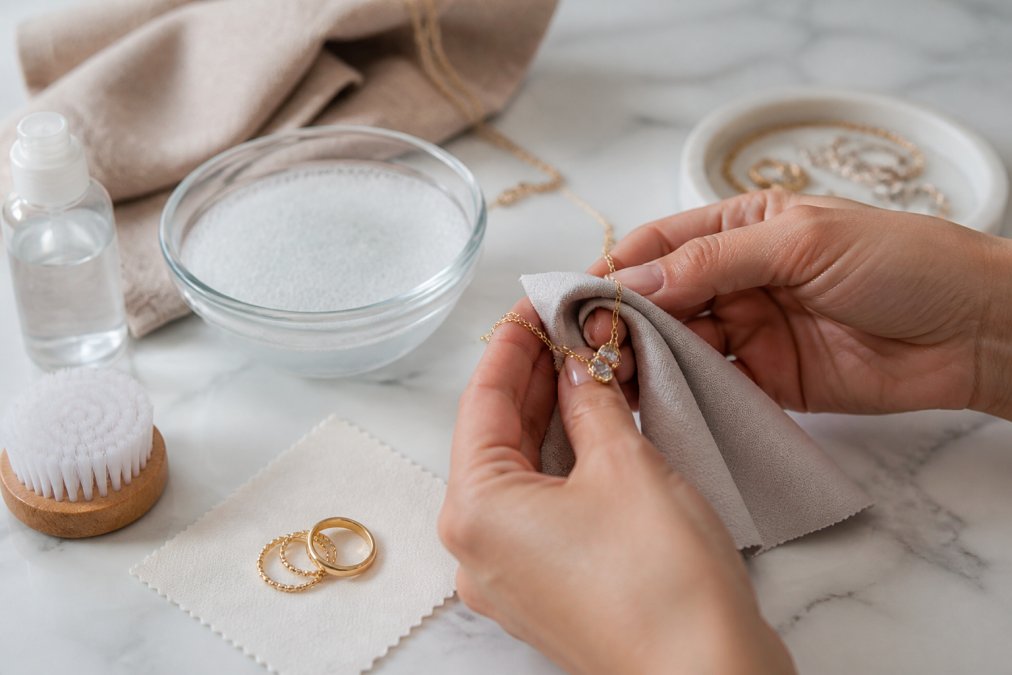
For sterling silver, warm water with a few drops of mild dish soap works. Use a soft cloth or soft-bristled brush to gently remove buildup, then dry immediately. For tarnished silver, a specialized silver cloth or dip works faster than polishing by hand. Store silver in an airtight container or zip-lock bag to slow oxidation.
Stainless steel and PVD-coated pieces need only occasional wiping with a damp cloth. Avoid harsh chemicals and abrasive scrubbing, which can damage the coating. For vermeil, treat it like sterling silver but be gentler, the gold layer is thin and can wear through with aggressive polishing.
Remove jewelry before swimming, showering, or exercising. Chlorine and sweat accelerate tarnishing and corrosion. This single habit extends the life of affordable everyday jewelry that lasts by months or even years.
Building a Capsule Jewelry Collection That Works Year-Round
A capsule collection means owning fewer pieces that coordinate with everything. Start with neutral metals, either warm gold tones or cool silver, and stick to that family. One simple chain necklace, small hoop earrings, and a delicate bracelet work with casual and professional outfits. Add one statement piece in your chosen metal for occasions when you want more presence.
Layering and stacking extend versatility. Two thin necklaces worn together create visual interest without buying more pieces. Mixing metals intentionally (pairing gold vermeil with silver) works if you commit to it as a style choice rather than accident. Classic styles, simple chains, small hoops, minimal rings, outlast trends and look good across years of wear.
Quality matters more in a capsule collection because you wear each piece frequently. Investing in one excellent layering necklace beats owning five mediocre ones.
Cost-Per-Wear: Choosing Pieces That Justify Their Price
Cost-per-wear divides the total price by estimated wears over a realistic timeframe (typically 12-24 months). A $40 piece you wear 200 times costs $0.20 per wear. A $200 piece worn 50 times costs $4 per wear. For affordable everyday jewelry that lasts, the math favors buying fewer, better pieces rather than many cheap ones, but only if you accurately predict wear frequency.
How to calculate realistic wear frequency:
Start by categorizing pieces into three groups: everyday basics, occasional wear, and seasonal/trendy.
Everyday basics (simple chains, small hoops, delicate rings you wear 4-6 days per week) justify higher material investment because the wear frequency is predictable and high. A $60 gold vermeil necklace worn 250 times over 12 months costs $0.24 per wear. That same necklace in gold-plated ($25) might only last 100 wears before the plating wears through, costing $0.25 per wear, nearly identical cost, but the vermeil piece survives longer and looks better throughout its lifespan.
Occasional wear pieces (statement necklaces, chandelier earrings, pieces for work or events) justify lower material investment because you'll wear them 1-2 times per month. A $15 trendy piece worn 20 times over 12 months costs $0.75 per wear. Spending $60 on the same style in premium materials would cost $3 per wear, which is wasteful if you'll retire the style in 18 months anyway.
Seasonal or trend-driven pieces justify the lowest investment.
Material durability affects the math:
Building a realistic wear forecast:
The capsule collection advantage:
Frequently Asked Questions
What affordable jewelry brands don't tarnish?
Sterling silver, gold vermeil, and gold-filled pieces resist tarnishing better than gold-plated options because they have thicker layers of precious metal. Look for brands that use PVD coating or higher plating thickness (at least 2-3 microns). Stainless steel and nickel-free base metals also hold up well for everyday wear without oxidization. Check product descriptions for material specifications and plating thickness before purchasing.
Is gold vermeil better than gold plated for everyday wear?
Gold vermeil is more durable for everyday jewelry because it has a thicker gold layer (at least 2.5 microns) over sterling silver, compared to gold-plated jewelry which typically has 0.5 microns or less. Vermeil pieces maintain their appearance longer with regular wear and light cleaning. However, both require care to prevent wear. Vermeil costs more upfront but offers better longevity, making it the smarter choice if you wear pieces daily.
How often should I clean my everyday jewelry?
Clean jewelry every 2-4 weeks with regular daily wear, or monthly if worn less frequently. Use a soft cloth and mild soap with warm water for most metals. Avoid harsh chemicals and ultrasonic cleaners unless the piece is solid gold or sterling silver without gemstones. Proper storage in a dry place also prevents tarnishing. Regular maintenance keeps pieces looking fresh and extends their lifespan significantly.
What's the difference between affordable jewelry that lasts and fast-fashion pieces?
Long-lasting affordable jewelry uses quality materials like sterling silver, gold vermeil, or gold-filled metals with proper plating thickness. Fast-fashion pieces often use thin plating over low-quality base metals that tarnish quickly. Check for material transparency, brand reputation, and care instructions. Investing in fewer, better pieces with proven durability costs less over time (cost-per-wear) than replacing trendy pieces every few months.


